

It is ten o'clock, and you should be asleep. You have been in bed for an hour, and the light has been off for forty-five minutes, and your eyes are closed, and your breathing is slow and regular, and by every outward sign you are asleep. But you are not asleep. You are lying in the dark, staring at the ceiling, and behind your eyes the ceiling is not there. Behind your eyes there is a differential equation, and you are trying to solve it, and you cannot, and you are not sure you will ever be able to, and tomorrow at nine o'clock you will sit down in a room full of strangers and open a paper that will contain problems harder than this one, and you will have ninety minutes, and the clock will not stop for you, and the equation will not solve itself.
This is the night before the British Physics Olympiad. And you are not alone.

Eleven O'Clock: The Last Revision
You get up. You know you should not. You have read the articles, you have listened to the teachers, you have told yourself a hundred times that last-minute revision does not work, that the mind needs rest, that the best preparation is the preparation you did weeks ago. But your hands are already on the doorknob, and your feet are already on the cold floor, and you are already walking to the desk in the corner of the room, the one with the lamp and the stack of papers and the notebook that has been your constant companion for the past three months.
You turn on the lamp. The light is small and warm, and it makes a circle on the desk, and inside the circle is the notebook, and outside the circle is the dark, and for a moment the world is very simple: there is the light, and there is the work, and there is you, and there is nothing else. You open the notebook to the page you know by heart — the page with the key formulae, the ones you have written and rewritten so many times that the paper is soft and the ink is beginning to fade. You read them again. Not because you need to. Because you need to see them. Because there is a comfort in the familiar shapes of the equations, the way there is comfort in a favourite song or a well-worn path or the face of someone you love.
You read the formula for the energy stored in a capacitor. You read the period of a simple pendulum. You read the expression for the magnetic field around a long straight wire. You read them, and you nod, and you feel something settle inside you, and you close the notebook, and you turn off the lamp, and you walk back to the bed, and you get in, and you close your eyes, and you try again to sleep.
Midnight: The Window
Sleep does not come. At midnight, you get up again, and this time you do not go to the desk. You go to the window. You push it open, and the night air comes in, cool and clean, and it carries with it the smell of the garden and the distant sound of a car on the main road and the faint, persistent hum of the world going on without you. You lean on the sill and look out.
The street is empty. The houses across the road are dark, except for one, on the corner, where a light burns in an upstairs window. You wonder who is in that room, and what they are doing, and whether they too are awake, and whether they too have an exam tomorrow. Probably not. Probably it is someone who works nights, or someone who is reading, or someone who simply cannot sleep for reasons that have nothing to do with capacitors or pendulums or the magnetic field around a long straight wire. But for a moment, in the dark, you feel a kinship with them — a sense that you are both awake in a sleeping world, both keeping watch over something, both waiting for the morning to come.
You think about the exam. You think about the problems you have solved, and the ones you have not. You think about the training you have done, the past papers you have worked through, the hours you have spent at the desk with the lamp and the notebook. You think about the fact that you are ready, as ready as you will ever be, and that there is nothing more you can do tonight, and that the only thing left is to sleep, and to wait, and to trust that the work you have done will be there tomorrow, waiting for you, in the back of your mind, like a friend who has promised to meet you at a certain place at a certain time.
One O'Clock: The Moon
At one o'clock, you are still awake. You have given up on sleep. You are lying on your back, and your eyes are open, and you are looking at the ceiling, and the ceiling is no longer a ceiling. It is a screen, and on the screen is a film of the day to come: you walking into the exam hall, you sitting down, you opening the paper, you reading the first question. In the film, you solve it. In the film, you solve all of them. In the film, you walk out at half past ten with a feeling of quiet triumph, and the sun is shining, and the birds are singing, and everything is exactly as it should be.
But then the film changes, and in this version you cannot solve the first question. You read it three times, and you do not understand it. You try an approach, and it leads nowhere. You try another, and it leads nowhere too. You look at the clock, and twenty minutes have gone, and you have written nothing, and the room is silent, and everyone else is writing, and you can hear the scratch of their pens, and you feel the panic rising in your chest like water, and you think, I cannot do this, I am not good enough, I should not be here.
You close your eyes, and you breathe, and you let the film dissolve. You have seen this film before. You have seen it a hundred times, in a hundred different variations, and it has never come true. The exam is never the film. The exam is always something else — something you cannot predict, cannot rehearse, cannot control. And that, you remind yourself, is the point. That is what the BPhO is for. It is not a test of how well you have memorised. It is a test of how well you can think, in the moment, when the moment comes.
You think about the moon. You can see it through the window, a thin crescent hanging above the rooftops, and you think about the fact that it is not really a crescent at all — it is a sphere, lit by the sun, and the shape you see is just the part that is facing you, the part that the geometry of light and shadow allows you to see. The rest is there, hidden in the dark, but it is there, and it is real, and it does not cease to exist because you cannot see it. And you think: this is what preparation is. The work you have done is the whole moon. The exam is the crescent. The crescent is all that will be visible tomorrow, but the whole moon is there, behind it, supporting it, holding it up. You do not need to see all of it. You just need to trust that it is there.
Three O'Clock: The Empty Street
At three o'clock, you get up for the third time. You are not going to the desk. You are not going to the window. You are going to the kitchen, to make a cup of tea, because you have given up on sleep, and you might as well be warm. You walk down the stairs in the dark, and the house creaks around you, and the refrigerator hums its low, constant note, and the world outside the window is utterly silent, as if the whole town is holding its breath, waiting for the morning.
You put the kettle on, and while it boils, you stand at the kitchen window and look out at the street. It is empty. The streetlights are on, and they make pools of orange light on the pavement, and beyond the pools the world is dark, and the darkness is not threatening but peaceful, as if the night is not an absence but a presence, a thick, soft, quiet presence that wraps around the sleeping houses and holds them safe until the morning.
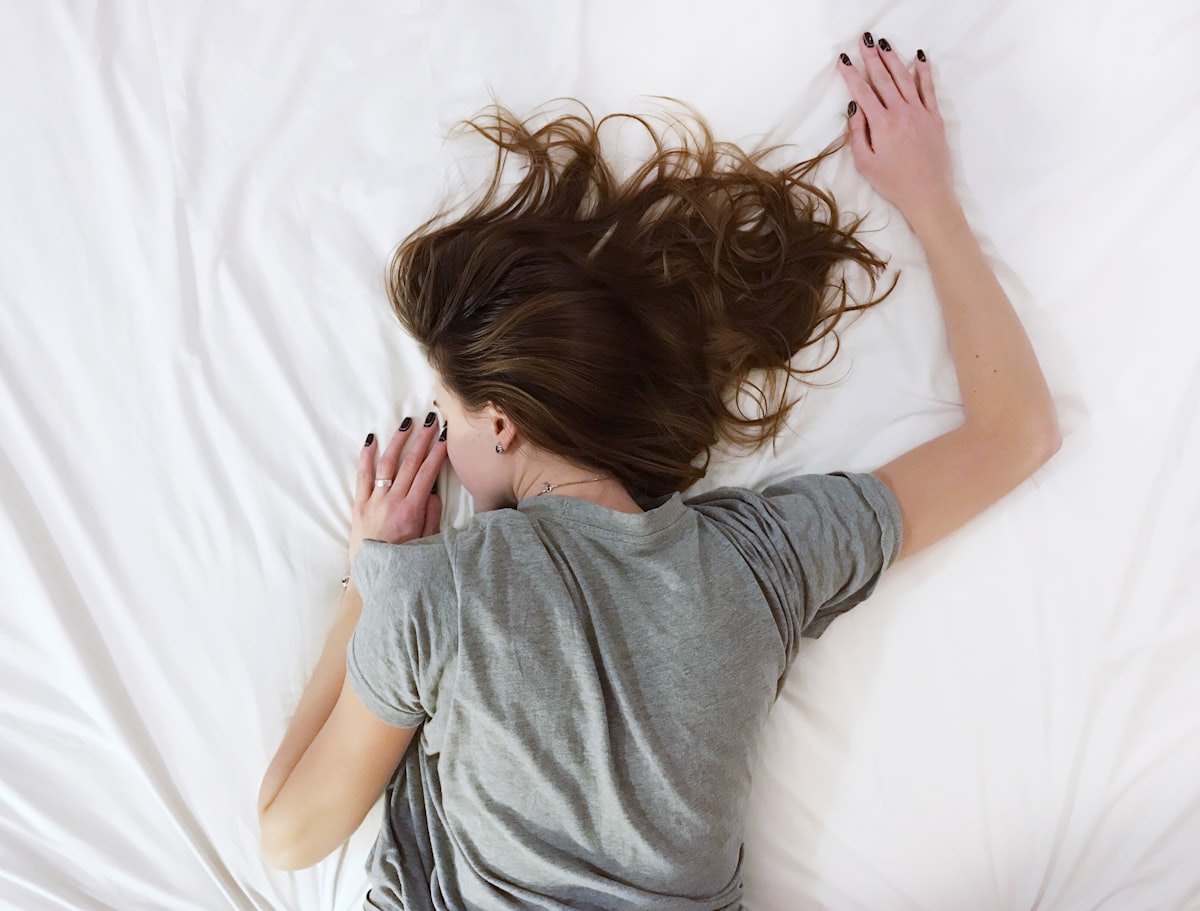
The kettle boils. You make the tea, and you carry it back upstairs, and you sit on the edge of the bed, and you drink it slowly, and you feel the warmth spread through you, and you think about the fact that tomorrow, in a few hours, you will be sitting in a room with twenty other people, and you will open a paper, and you will begin. And you think about the fact that those twenty other people are also awake, or were awake, or will be awake at some point in the night, lying in their own beds, staring at their own ceilings, watching their own films. And you feel, for the first time in the night, that you are not alone. That this sleeplessness is not a personal failing but a shared condition, a rite of passage, a small price paid for the privilege of attempting something difficult.
You finish the tea. You put the cup on the bedside table. You get back into bed. And this time, perhaps because the tea is warm, or perhaps because the street outside is so quiet, or perhaps because you have finally accepted that sleep may not come, you close your eyes, and you let go, and you drift.
Five O'Clock: The First Light
You wake at five. You have been asleep for two hours, and your body feels heavy and your mind feels thin, as if the sleep has not so much rested you as paused you, and now the pause is over and the day is resuming. You lie still for a moment, and you listen to the house, and you hear the first birds — tentative, tentative, then more confident, a small chorus assembling in the garden, greeting the light that is not yet there but is coming, is always coming, has never once failed to come.
You get up. You go to the window. The sky is changing. The dark is lifting, slowly, like a veil, and in the east there is a band of colour that is not yet light but is the promise of it — a pale, cool, luminous grey that is slowly, imperceptibly, turning to blue. You watch it for a while, and you think about the physics of it — the scattering, the absorption, the long journey of the photons from the sun to the upper atmosphere to your eyes — and you think about the fact that this is what you love. Not the exam, not the medal, not the university place. This. The light. The physics of the light. The fact that you can look at the sky and understand it, and that the understanding does not diminish the beauty but deepens it, makes it richer, makes it more.
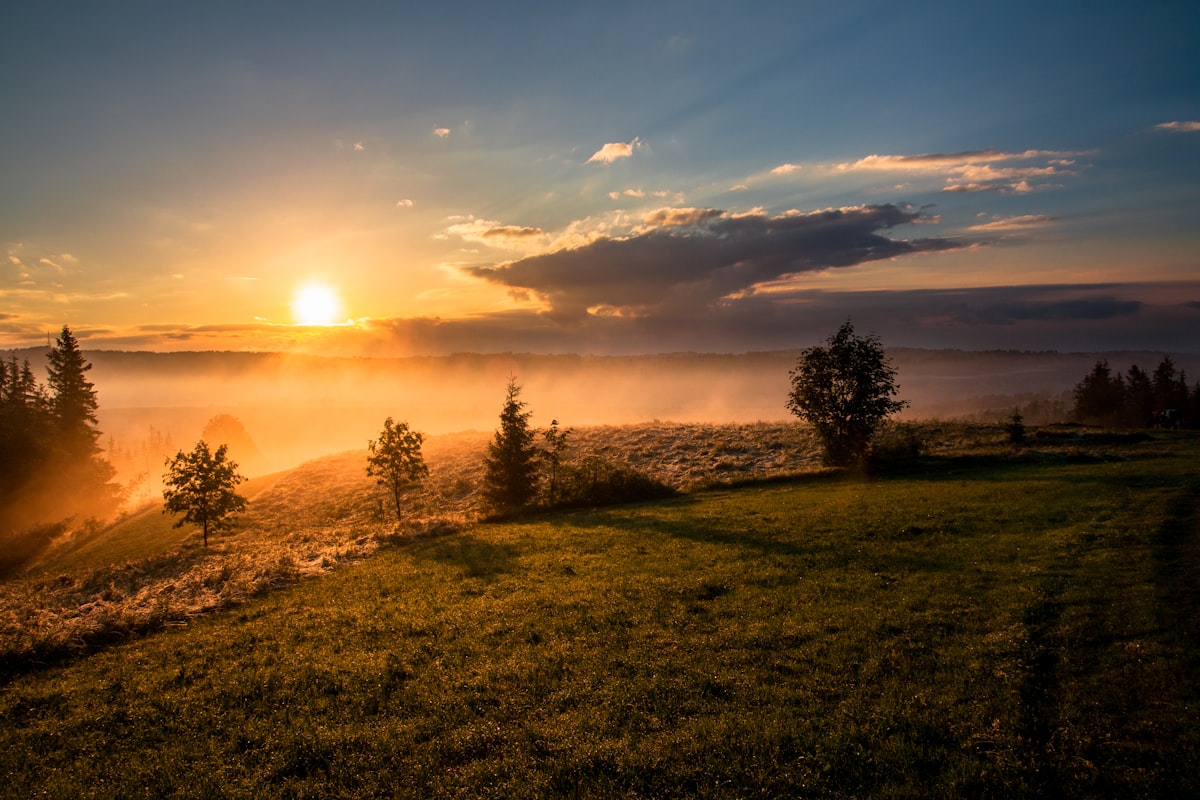
Six O'Clock: The Morning
By six o'clock, the world is awake. You can hear the traffic on the main road, the distant sound of a dog barking, the neighbour's car starting up in the drive. The sky is blue now, a proper blue, the blue of a morning that has decided what it wants to be. You dress, and you pack your bag — pens, pencils, ruler, calculator, water — and you go downstairs, and you make breakfast, and you eat it slowly, and you do not think about the exam, because there is nothing to think about. The thinking is done. The preparation is done. All that is left is the doing.
You walk to the bus stop, and the air is cool and clean, and the light is golden and low, and the world is full of people going to work, to school, to the ordinary business of being alive. You are one of them, and you are not one of them. You are a person going to an exam, and the exam is the BPhO, and the BPhO is the hardest thing you have ever attempted, and you are afraid, and you are excited, and you are ready, and you are not ready, and all of these things are true at once, and none of them cancels out the others.
Seven O'Clock: The Walk In
You arrive at school early. The building is quiet, and the corridors are empty, and the light in the windows is the flat, even light of a morning that has not yet decided whether it will be warm or cold. You walk to the exam hall, and you stand outside the door, and you look at the notice that says BPhO Round 1 — Candidates enter here, and you feel the weight of the moment, and you breathe, and you push the door open, and you walk in.
The room is as you remember from the film you watched at one o'clock. The desks are spaced apart. The papers are face down. The invigilator is at the front, sorting her notes. There are other students already here, sitting at their desks, some reading, some staring at the wall, some with their eyes closed. You find your seat. You sit down. You put your pens on the desk. You put your calculator on the desk. You put your water on the floor.
And then you wait.
The Space Between
This article is about the space between. Between the last revision and the first question. Between the night and the morning. Between the fear and the courage. Between the person you were at ten o'clock, lying in the dark, watching the film of the exam in your mind, and the person you are at nine o'clock, sitting at the desk, waiting for the invigilator to speak. This space is not empty. It is full of everything that the BPhO has taught you — not the equations, not the formulae, not the techniques, but the deeper things. The patience to sit with a problem you do not yet understand. The courage to attempt something you might fail. The humility to know that you do not know, and the confidence to believe that you can find out. The willingness to be afraid, and to begin anyway.
The invigilator looks up. She checks her watch. She looks at the room. She says, "You may begin."
And you begin.
Outside, the morning goes on. The traffic moves. The birds sing. The sun climbs higher, and the light strengthens, and the shadows shorten, and the world turns, as it always does, towards the day. And in a quiet room, in a school that looks like any other school, a student opens a paper, and reads the first question, and picks up a pen, and starts to write. And the night — the long, strange, restless, beautiful night — is over. And the day has begun. And the physics is waiting.