

There is a morning, not long ago, when you walked to school the way you always do — head down, earbuds in, thinking about nothing much — and then, for some reason, you looked up. You looked up at the sky, and something was different. Not the sky itself, which was the same pale blue it had been a thousand mornings before. Something was different in the way you saw it. You noticed the way the light scattered in the atmosphere, the way the shorter wavelengths were bent more than the longer ones, the way the sky was not really blue at all but a particular shade of blue that depended on the angle of the sun, the density of the air, and the size of the water droplets suspended in it. You did not calculate any of this. You did not need to. You simply saw it, and the seeing was enough.
This is the quiet, unadvertised gift of the British Physics Olympiad. It is not the medal, though that is nice. It is not the university place, though that matters. It is not even the skills — the first-principles thinking, the quantitative intuition, the comfort with uncertainty — though these are invaluable. The quiet gift is perception. The BPhO changes the way you see the world. It turns the ordinary into the extraordinary. It turns a morning walk into a laboratory, a cup of tea into a thermodynamics experiment, and a rain-streaked window into a lesson in optics. And once you have seen the world this way, you cannot go back.


The Morning Walk: A Lesson in Scattering
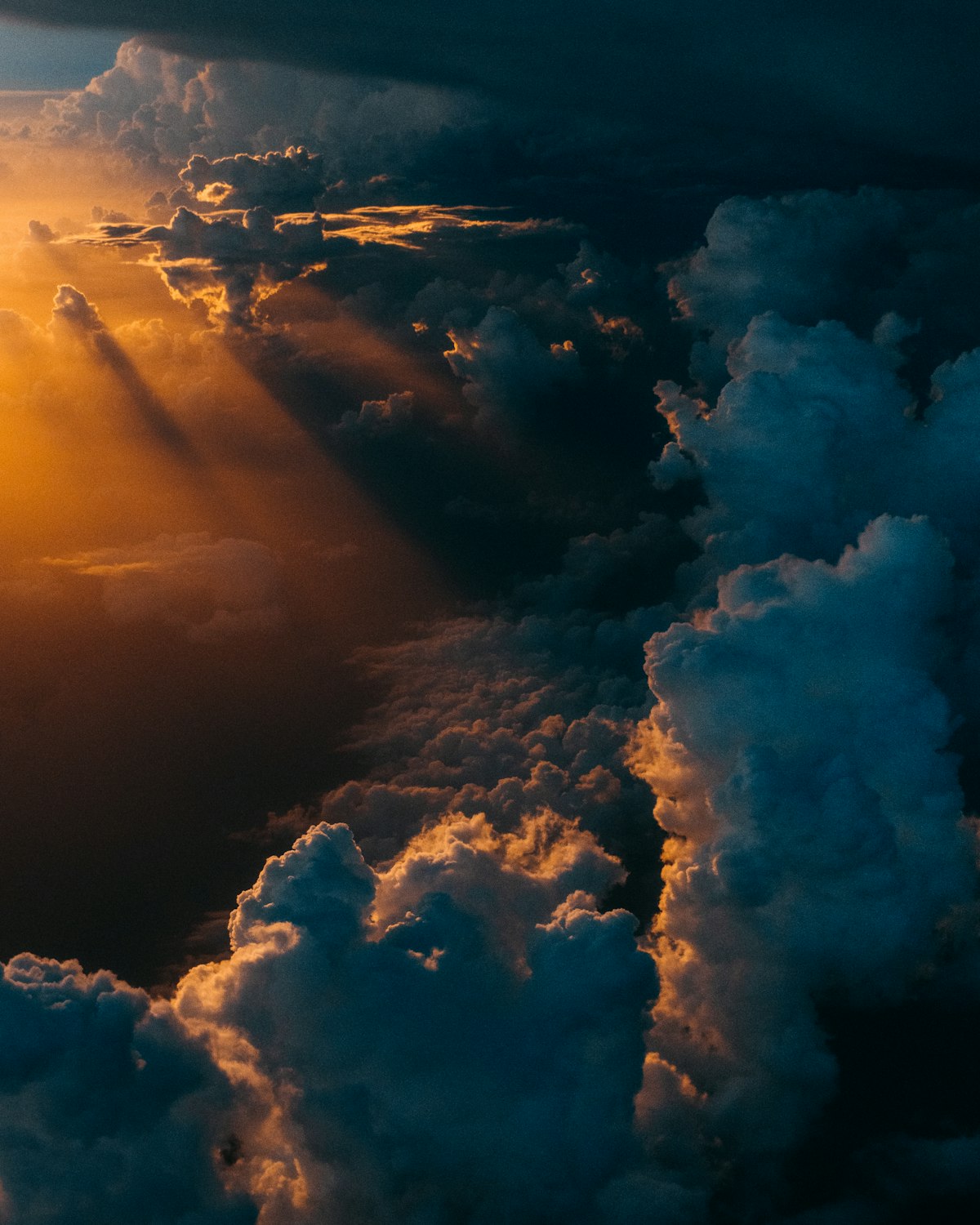
The sky is blue. This is a fact that most people know, and most people have never thought about. But the BPhO student has thought about it, because the BPhO has a way of taking the things you think you know and revealing that you do not know them at all. The sky is blue because of Rayleigh scattering — the tendency of light to scatter off particles much smaller than its wavelength, with the scattering intensity proportional to the inverse fourth power of the wavelength. Blue light, with its shorter wavelength, scatters about five and a half times more strongly than red light. That is why the sky is blue, and that is why sunsets are red — at sunset, the light travels through a much longer column of atmosphere, and the blue has been scattered away before it reaches your eyes, leaving the reds and oranges behind.
You did not need to work this out for the BPhO. But the BPhO made you curious enough to want to know. And once you know, you cannot un-know it. Every time you look at the sky now — every morning walk, every evening drive, every time you glance out of a window during a boring lecture — you see the physics. You see the scattering. You see the atmosphere not as empty space but as a medium, a filter, a lens that shapes the light before it reaches you. The sky is no longer just blue. It is blue for a reason, and knowing the reason makes it more beautiful, not less.

The Kitchen: A Thermodynamics Laboratory
You make a cup of coffee, and while you wait for it to cool, you watch the steam rise. Before the BPhO, this was just steam. Now it is a convection current — warm air rising, carrying water vapour with it, cooling as it rises, the vapour condensing into tiny droplets that you can see as white wisps. You watch the way the steam curls and eddies, and you recognise the signature of turbulent flow — the chaotic, unpredictable motion that governs everything from weather patterns to the flow of blood through your arteries.
You put the kettle on, and while it heats, you think about the rate of energy transfer. The kettle is rated at three kilowatts, which means it delivers three thousand joules of energy per second. You do a rough calculation in your head — it takes about a litre of water, the specific heat capacity is about four thousand joules per kilogram per degree, you want to raise the temperature by about eighty degrees — and you arrive at an answer of about two minutes, which is roughly how long the kettle takes. The calculation is rough, but it is close, and the closeness is satisfying in a way that has nothing to do with the BPhO and everything to do with the simple pleasure of understanding how the world works.
Your mother walks into the kitchen and asks you why you are staring at the kettle. You say you are not staring at the kettle, you are observing the rate of heat transfer. She gives you a look. You make your coffee and leave the kitchen, but you are smiling, because the world is a more interesting place than it was yesterday, and you are the only one who knows it.
The Bridge: A Masterclass in Statics
On the way to school, you cross a bridge. It is a suspension bridge, and it has always been there, and you have never thought about it until now. But the BPhO has made you think about it, because the BPhO has a section on mechanics that includes problems about forces, torques, and equilibrium, and now, when you look at a bridge, you do not see a bridge. You see a system in static equilibrium.
You see the cables, and you understand that they are in tension, and that the tension varies along the length of the cable because the load is not uniform. You see the towers, and you understand that they are in compression, bearing the weight of the deck and transferring it to the ground. You see the deck itself, and you understand that it is a beam in bending, with compression on top and tension on the bottom, and that the shape of the bridge — the elegant catenary curve of the main cables — is not an aesthetic choice but a mathematical necessity, the shape that distributes the load most efficiently.
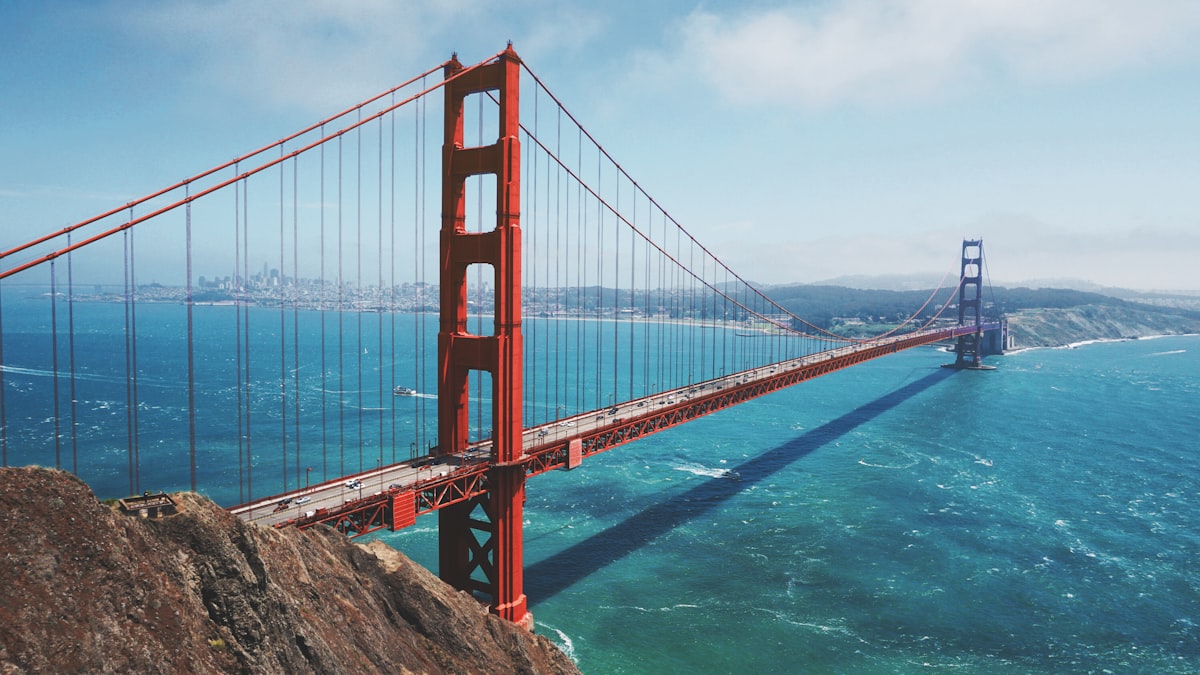
You walk across the bridge, and you feel the slight vibration under your feet, and you wonder about the natural frequency of the structure, and whether the wind could ever drive it into resonance. You have heard of the Tacoma Narrows Bridge, which tore itself apart in 1940 because the wind excited its natural frequency. You think about this as you walk, and you feel a small thrill of something that might be fear and might be awe, and then you reach the other side and the moment passes, and the bridge is just a bridge again. But you know what it is now, and you will never walk across it in quite the same way.
The Rain on the Window: Optics in the Everyday
It is raining, and you are sitting in the back of the car, watching the droplets on the window. Before the BPhO, this was just rain. Now it is a lesson in optics. Each droplet is a tiny lens, and each one is bending the light that passes through it, focusing it, distorting it, breaking the view of the world outside into a hundred tiny, overlapping images. You watch the way the droplets merge and split, and you think about surface tension — the force that holds the water together, that makes the droplets round, that determines whether the water beads up or spreads out across the glass.
You watch the way the light refracts through the droplets, and you think about Snell's law, and about the fact that the rainbow you saw last week was the same phenomenon writ large — millions of droplets, each one splitting the white light into its constituent colours, each one acting as a tiny prism. You did not see a rainbow last week because of some special atmospheric condition. You saw a rainbow because physics is everywhere, and the BPhO has taught you to look for it.

Your father asks you what you are looking at. You say, "The rain." He says, "It's just rain." You say, "No, it's optics." He gives you the same look your mother gave you in the kitchen. You lean your head against the window and watch the droplets race each other down the glass, and you think about the coefficient of friction between water and glass, and about the fact that the droplets are accelerating under gravity but being slowed by drag, and about the fact that the whole thing — the race, the merging, the splitting — is a fluid dynamics problem that no one has ever fully solved. And you smile, because the world is so much richer than you used to think, and you are the only one in the car who knows it.
The Sea: A Wave Mechanics Textbook
In the summer, you go to the coast, and you stand on the beach and watch the waves come in. Before the BPhO, this was just the sea. Now it is a wave mechanics textbook, written in water and sand, with every wave a lesson in energy transfer, interference, and the mathematics of periodic motion.
You watch the way the waves approach the shore, and you notice that they always seem to come in parallel to the coastline, even when the wind is blowing at an angle. You know why this is: wave refraction. As the waves enter shallower water, the part of the wave that reaches the shore first slows down, while the part in deeper water continues at its original speed. The wavefront bends, rotating until it is parallel to the shore. It is the same physics that bends a pencil when you put it in a glass of water — the same Snell's law, the same principle of least time — but applied to waves that are a hundred metres long and carry enough energy to reshape the coastline over centuries.

You watch the waves break, and you think about the fact that the wave is not a thing moving through the water — it is a pattern of energy moving through a medium. The water itself hardly moves at all; it simply oscillates up and down, passing the energy along to its neighbour. You think about this as you stand there, and you realise that this is a metaphor for something much larger than physics — for the way ideas move through a community, for the way a single BPhO paper can ripple outward through a school, a family, a generation, changing the way people think without any of them ever leaving their place.
The Night Sky: The Oldest Laboratory
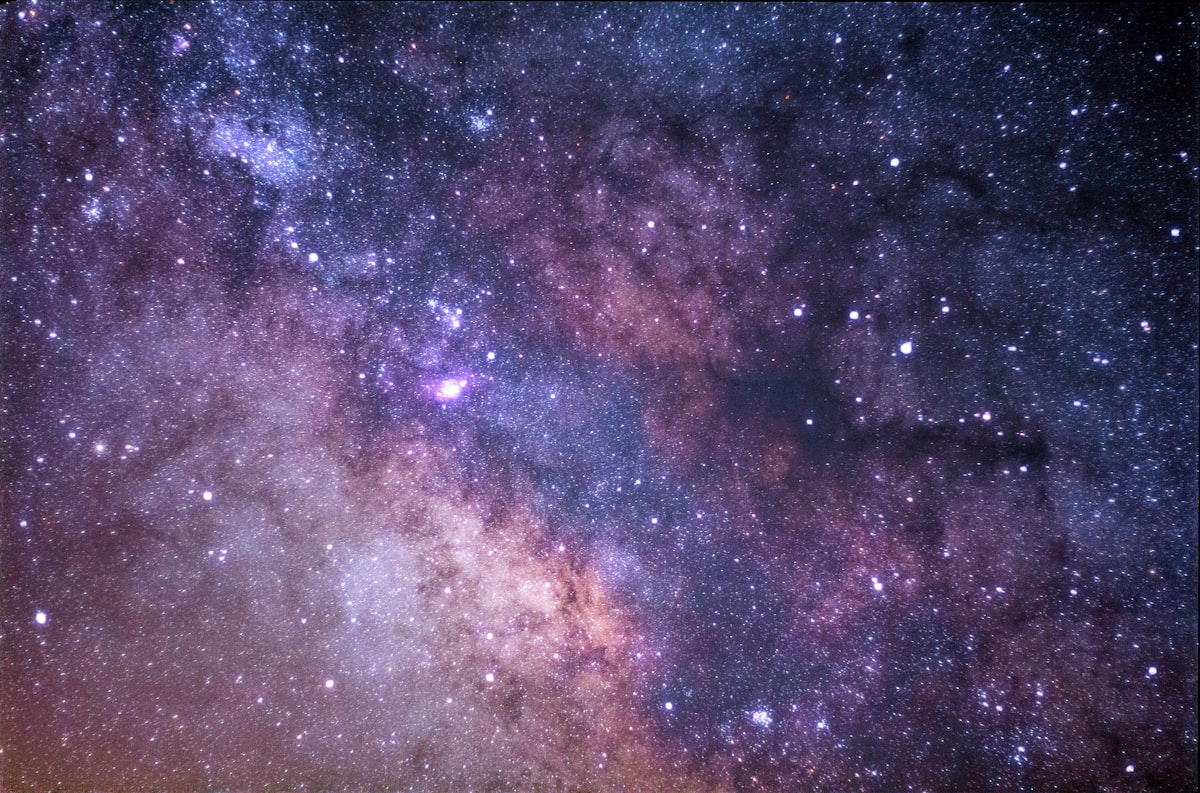
At night, you lie in the garden and look up at the stars. This is the oldest laboratory in the world — older than any university, any textbook, any equation. And the BPhO has taught you to read it, not as a collection of distant lights, but as a story written in the language of physics.
You see the stars, and you understand that they are not points of light but enormous balls of plasma, held together by gravity, powered by nuclear fusion, converting hydrogen into helium and releasing energy in the process. You see the colours — some stars are blue-white, some are yellow, some are red — and you understand that the colour tells you the temperature, and that the temperature tells you the mass, and that the mass tells you the fate: whether the star will end its life as a white dwarf, a neutron star, or a black hole. You are looking at a physics problem written across the sky, and the BPhO has given you the tools to begin to read it.
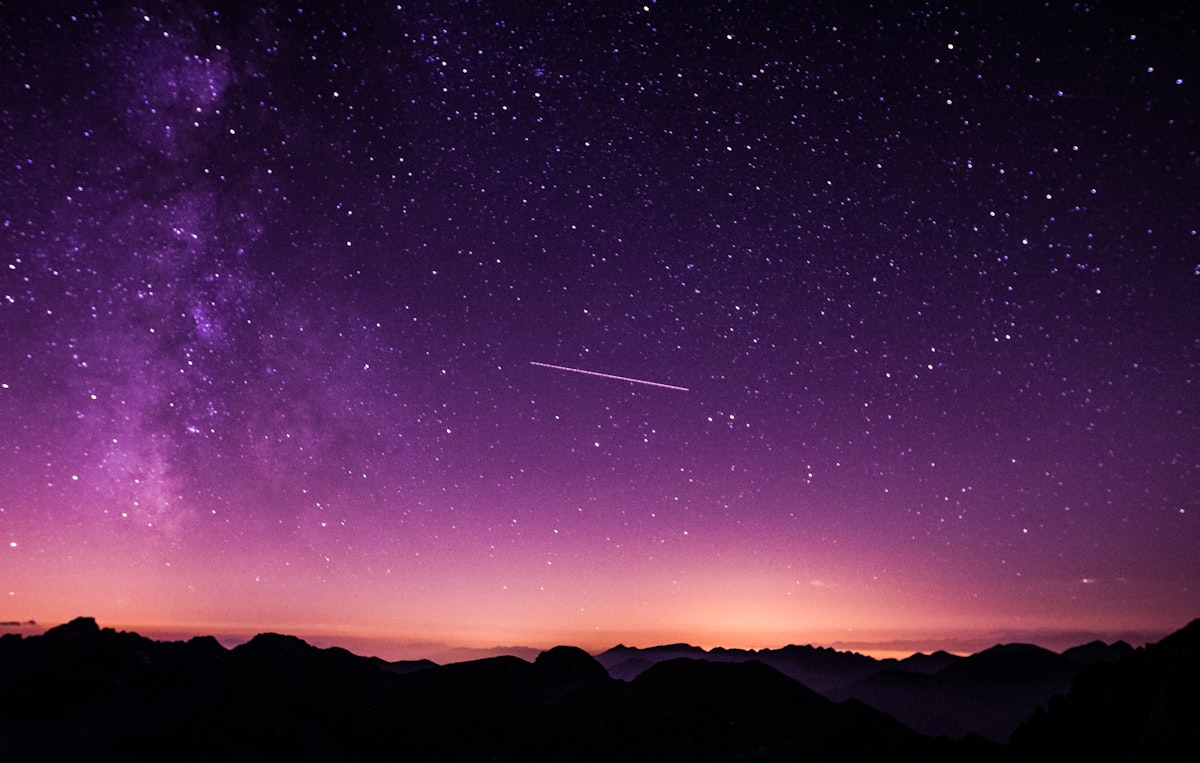
You think about the light that is reaching your eyes right now, and you understand that it has been travelling for years, decades, centuries, carrying information about a star that may no longer exist. You think about the Doppler effect, and about the fact that the light from distant galaxies is red-shifted, stretched by the expansion of the universe, and that this is how we know the universe is getting bigger. You think about the fact that the atoms in your body — the carbon in your cells, the iron in your blood, the calcium in your bones — were forged in the hearts of stars that died billions of years ago, and that you are, in the most literal sense, made of stardust.
You lie there for a long time, and you do not think about the BPhO, or about university, or about anything except the sky and the silence and the strange, wonderful fact that you are a collection of atoms that has become conscious of itself, looking up at the sky from which it came, and trying to understand. This is what physics is, in the end. Not equations, not exams, not medals. Just this: the attempt to understand, and the joy that comes with it.
The City: Motion, Energy, and the Hidden Machinery of Life
You walk through the city on a Saturday afternoon, and the BPhO walks with you. You see a car accelerating away from a traffic light, and you think about the force the engine must produce to overcome inertia, air resistance, and rolling friction. You see a child on a swing, and you recognise the pendulum — the same pendulum you solved in Round 1, the same equation of motion, the same small-angle approximation — and you feel a small smile at the recognition.
You see a ball bouncing on the pavement, and you think about the coefficient of restitution — the fraction of kinetic energy that is preserved in each bounce — and you watch the ball rise a little less high each time, losing energy to sound and heat, and you think about the fact that the energy is not destroyed but merely dispersed, spread out into the air and the ground and the molecules of the ball itself, until it is indistinguishable from the background noise of the universe. This is the second law of thermodynamics, written in the language of a bouncing ball, and it is the most profound and the most melancholy law in all of physics: that order tends to disorder, that energy tends to spread out, that the universe is slowly, inexorably, winding down.
You watch the ball come to rest, and you think about this for a moment, and then you keep walking, because there is more to see. There is always more to see.
The Sunset: The Final Lecture
At the end of the day, you stop and watch the sunset. The sky turns red, then orange, then purple, then deep blue, and the stars begin to appear, one by one, as the light fades. You watch the colours change, and you understand them — the scattering, the absorption, the changing angle of the sun — and you also understand that understanding them does not diminish them. If anything, it makes them more beautiful, because you see not just the colours but the reasons, and the reasons are as elegant and as intricate as the colours themselves.
You think about the BPhO, and about what it has given you. It has given you skills, certainly — the ability to solve difficult problems, to think from first principles, to communicate clearly. It has given you opportunities — university places, scholarships, the chance to meet extraordinary people. But its greatest gift is the one that no one talks about, the one that does not appear on a UCAS form or a CV. It has given you eyes. It has taught you to see the world as it really is — not as a collection of objects and events, but as a vast, intricate, beautiful machine, governed by laws that are simple, universal, and knowable.
And this is the gift that keeps on giving, long after the medals have been packed away and the past papers have been recycled. You will walk to work tomorrow, and you will see the scattering in the sky. You will make your coffee, and you will see the convection currents. You will cross a bridge, and you will feel the forces in the steel. You will watch the rain, and you will see the optics. You will look up at the stars, and you will feel the weight of the universe pressing gently against your skin.
This is what the BPhO really is. Not a competition. Not a test. Not a line on a university application. It is an education in seeing — a way of learning to pay attention to the world, and to find, in the paying of attention, a joy that never fades.
The sun has gone down now, and the stars are out, and you are walking home in the dark. The streetlights hum overhead, and you think about the physics of the gas discharge tubes, and about the fact that the light you are walking under was, a fraction of a second ago, a stream of electrons colliding with mercury atoms, exciting them to higher energy levels, which then decay and emit photons at specific wavelengths. You think about this, and you smile, and you keep walking, because the world is full of physics, and you have learned to see it, and you will never stop seeing it, and that is the most wonderful thing the BPhO has given you.
The physics is in your pocket. It has been there all along. You just had to learn to look.