As the BPhO China region fully implements a strict "ticket system", preparation planning must be significantly advanced. With only three months left in the golden preparation period, blind practice will only yield half the results. A scientific phased plan is the key to winning awards.
I. Allocation Logic of the 3,500-Seat "Ticket System"
The total number of seats for BPhO Round 1 in China, Hong Kong, and Macau is strictly capped at 3,500, with a tiered allocation mechanism that has no direct registration channel:
- Priority Allocation (3,400 seats): 97% of the seats are allocated to IPC/SPC award winners. The first batch (deadline 1 August) is open to SPC Gold/Silver and IPC Gold awardees; the second batch (deadline 1 September) is open to SPC Bronze and IPC Silver/Bronze awardees. If seats are insufficient, the channel will be closed directly.
- Independent Supplementary Admission (100 seats): Only reserved for the top 100 candidates nationwide in the Round 0 selection on 30 September. Round 0 has no independent awards and serves solely as a screening tool for obtaining a Round 1 entry ticket.
II. BPhO 2026–2027 Season Complete Timeline
- Round 0 (Preliminary Screening): 30 September 2026, 60-minute all-English multiple-choice questions, used only for sprinting for seats.
- Round 1 (Main Competition): 10 November 2026, duration compressed to 2 hours, full score of 100, all derivation and proof questions.
- Round 2 (Advanced Competition): 21 February 2027, only Round 1 Top Gold awardees (top 5%–10% globally) are invited, with difficulty level comparable to Oxford and Cambridge admission tests.
III. The Hard-Core Value of BPhO for Top University Applications
BPhO is an officially recommended competition by Cambridge for Physics and Natural Sciences, and is one of the most prestigious international physics competitions. For students applying to top universities such as Oxford, Cambridge, and Imperial College London, its value is reflected in three dimensions:
- Core Boosting Material: Round 1 Top Gold/Gold awards are core additions to personal statements for Oxford Physics, Cambridge Engineering, and Imperial applications; Round 2 experience can serve as a direct core talking point in interviews.
- Proof of Ability: Outstanding results demonstrate that a student can independently reason, flexibly apply theories, and clearly express complex ideas—closely matching the thinking patterns assessed in Oxford and Cambridge interviews.
- Dual Score Improvement: The preparation knowledge points heavily overlap with Oxford and Cambridge admission tests (PAT, NSAA, ENGAA). Preparing simultaneously can achieve a win-win for both the competition and university entrance assessments.
IV. 100-Day Sprint: Three-Phase Scientific Preparation Plan
With only three months left until the main competition, it is recommended to advance efficiently according to the following pace:
- Phase 1 (September): Fill Gaps and Solidify Core Test Points – Focus on high-frequency topics such as mechanics, electromagnetism, and thermodynamics, and organise the BPhO-specific knowledge system. Prioritise completing competition knowledge points not covered in the school curriculum, build a complete knowledge framework, and lay a solid foundation for the subsequent sprint.
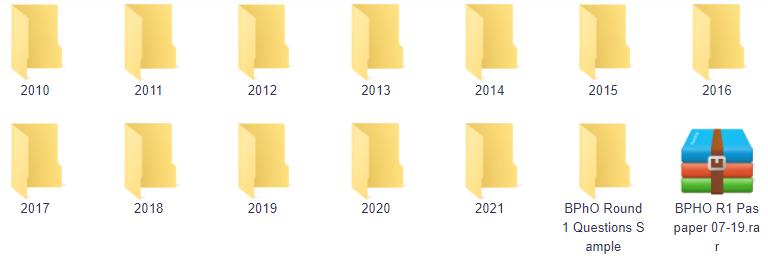
- Phase 2 (October): Targeted Breakthroughs and Sharpen Problem-Solving Thinking – Practise with past papers from the last 10 years by question type. Conduct targeted training on the competition's key difficulties, master physical modelling, logical derivation, and techniques for deconstructing complex problem types. Special attention should be given to modelling long question stems and standardising step-by-step writing, as BPhO awards marks for the process—getting the reasoning right earns points.
- Phase 3 (Before the November Exam): Mock Exams and Sprint to Adapt to the Exam Rhythm – Conduct full-paper mock drills to become familiar with the exam duration, question distribution, and marking standards. Use timed training to polish answering speed and accuracy, and target weak modules to maximise exam performance.
Self-study can easily trap students in a cycle of "more practice, slow improvement". With professional guidance to precisely control key difficulties and marking logic, students can avoid many detours and efficiently secure awards.
Registration for BPhO R0 in the 2026 season is now open! We can provide proxy registration services. Scan the QR code to obtain the registration form! Scan the QR code to get BPhO past papers + recommended booklist PDF + essential formula sheet for free!