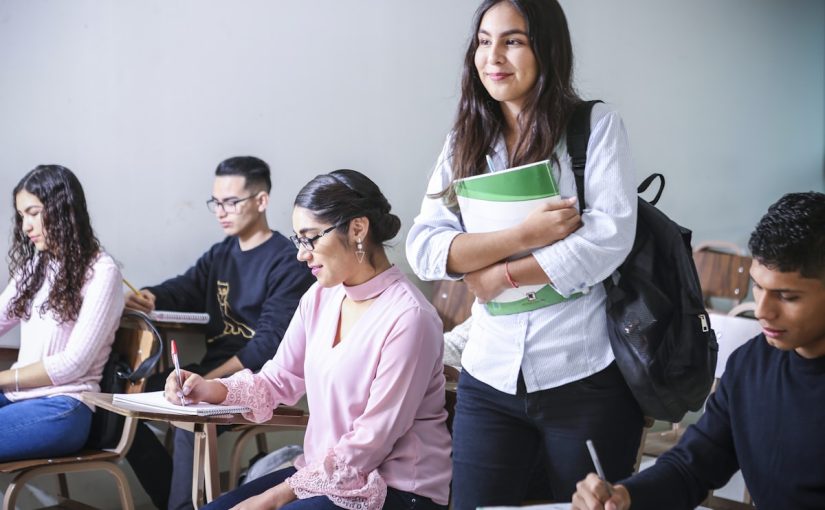
When the world's best young physicists gather at the International Physics Olympiad (IPhO), they arrive from more than 80 countries, each shaped by a radically different educational culture, training system, and national philosophy of what it means to excel in physics. Behind every medal is not just an individual talent, but an entire ecosystem — a national olympiad programme that has identified, nurtured, and prepared that student over many years. In this article, we take a global tour of the world's most influential physics olympiad programmes, comparing their structures, philosophies, and strengths. Whether you are a student preparing for the BPhO, a teacher advising talented pupils, or simply curious about how different nations cultivate excellence, this comparison will broaden your understanding of what is possible.


The Global Landscape: An Overview
Every national physics olympiad programme shares a common goal: to identify the most talented pre-university physicists and prepare them to represent their country at the IPhO. Beyond this, however, the approaches diverge dramatically. Some nations run highly centralised, state-funded systems with year-round training camps. Others rely on voluntary participation, decentralised coaching, and grassroots enthusiasm. Some identify talent through massive national exams involving hundreds of thousands of students; others use smaller, more selective processes.
Let us explore the programmes that have shaped the modern olympiad landscape.
🇨🇳 China: The Centralised Powerhouse
China has dominated the IPhO for much of the 21st century, and its national programme — the Chinese Physics Olympiad (CPhO) — is a marvel of systematic talent identification and development. The scale alone is staggering: each year, hundreds of thousands of students participate in preliminary rounds at the provincial and municipal levels. From this vast pool, a national squad of approximately 50 students is selected for intensive training, and ultimately a final team of five is chosen to compete at the IPhO.
Key Features of the Chinese System
Multi-tier competition: Provincial → Regional → National → Final Selection Camp. Each level filters for the very best.
Specialised schools: Certain high schools (notably in Shanghai, Beijing, and Hunan province) have become famous for their olympiad programmes, attracting top students from across the country.
Year-round training: The national squad trains together for months, often at elite universities such as Peking University and Tsinghua University, under the guidance of experienced coaches and professors.
Emphasis on mathematical fluency: The Chinese approach prizes extraordinary problem-solving speed, mathematical elegance, and the ability to handle highly abstract scenarios.
State support: The programme receives significant government funding and institutional backing, with olympiad success recognised as a matter of national prestige.
The Chinese model is extremely effective at producing IPhO medal winners — China regularly wins the most gold medals of any nation. However, critics note that the system is extraordinarily high-pressure, and the focus on olympiad-specific training can come at the expense of broader educational experiences.
🇷🇺 Russia: The Theoretical Tradition
Russia (and before 1991, the Soviet Union) has been a pillar of the physics olympiad movement since its earliest days. The Russian Physics Olympiad is one of the oldest and most respected national programmes in the world, and its approach reflects the country's deep tradition of theoretical physics and mathematical rigour.
Key Features of the Russian System
Regional → Federal → National stages: A multi-round system that identifies talent from across Russia's vast territory.
Summer schools and camps: Intensive residential programmes, often held at universities in Novosibirsk, Moscow, and St Petersburg, have been a feature of Russian olympiad training for decades.
Legendary problem books: The Russian tradition of publishing challenging physics problems — embodied in books like Irodov's, Krotov's, and the Tartu and Moscow competition series — has influenced olympiad preparation worldwide.
Emphasis on elegance: Russian-style problems prize beautiful, insightful solutions over brute-force calculation. The goal is to see the physics clearly and find the most elegant path to the answer.
Strong experimental component: Despite the theoretical emphasis, Russian students receive substantial laboratory training, reflecting the country's strength in experimental physics.
The Russian approach has produced some of the most creative and original physicists in the world, and its influence can be seen in olympiad programmes everywhere — not least in the BPhO, where several of the recommended preparation books are Russian in origin.
🇺🇸 United States: The Grassroots Model
The United States takes a fundamentally different approach. The US Physics Olympiad programme, coordinated by the American Association of Physics Teachers (AAPT), is characterised by its decentralised, bottom-up structure. There is no single national training centre, no state-funded residential camp system, and no dedicated olympiad schools. Instead, talent is identified through a series of open competitions, and preparation is largely individual or school-based, supplemented by summer programmes and mentoring.

Key Features of the American System
Open competitions: The F=ma exam (named after Newton's second law) is the first round — a 75-minute, 25-question multiple-choice test that anyone can enter. Approximately 10,000 students take it each year.
USAPhO semifinals and finals: Top performers advance to increasingly challenging examinations, culminating in a national final that selects the training camp cohort.
Summer training camp: Approximately 15–20 students are invited to an intensive camp (historically at the University of Maryland), where they undergo further testing and training before the final team of five is selected.
Emphasis on creativity: The American approach prizes originality, unconventional thinking, and the ability to find new approaches to familiar problems.
University-based mentoring: Many American students are coached by physics professors at local universities, and several top institutions (including MIT, Caltech, and Princeton) have strong traditions of supporting olympiad preparation.
The American model has its critics — some argue that the lack of centralised training puts US students at a disadvantage against the heavily coached teams from Asia. However, the US team has consistently performed at a high level, and the programme's emphasis on independent thinking produces students who are exceptionally well-prepared for research careers.
🇬🇧 United Kingdom: The BPhO and Oxford Model
The UK's pathway to the IPhO runs through the British Physics Olympiad (BPhO), administered by the BPhO Committee at the University of Oxford. The British model sits somewhere between the centralised Asian approach and the decentralised American one — it is more structured than the US programme but less state-directed than the Chinese or Russian systems.

Key Features of the British System
AS Challenge (Year 12): An accessible entry point for younger students, typically held in January/February.
Round 1 (Senior Challenge): The main national competition, held in November, open to Year 13 and below.
Round 2 (Invitational): Top ~30 performers from Round 1 are invited to a significantly harder paper in February.
Oxford Training Camp: Top performers are invited to an intensive residential camp at Oxford, with advanced lectures, problem sessions, and laboratory work.
Final selection: The 5-member UK team is chosen through a combination of Round 2 results, camp performance, and additional assessments.
Strong experimental focus: The UK programme places particular emphasis on laboratory skills, reflected in the fact that UK students have won the IPhO Experimental Prize on multiple occasions.
The BPhO is widely admired for its rigour, its accessibility, and the quality of its past papers — which are used by students worldwide as preparation material. At IPhO 2024, the UK team's 5 medals (including the Experimental Prize) demonstrated the continued strength of the programme.
🇸🇬 Singapore: Small Nation, Disproportionate Impact
Singapore is a case study in how a small nation can punch far above its weight in the physics olympiad world. Despite a population of just under 6 million, Singapore regularly sends teams that compete for medals against nations with ten or a hundred times its population.
Key Features of the Singaporean System
School-based identification: Talent is identified early through school competitions and national examinations.
National training programme: Selected students receive intensive coaching from experienced teachers and academics, often at the National University of Singapore (NUS) or Nanyang Technological University (NTU).
Emphasis on fundamentals: The Singaporean approach prizes deep understanding of core principles, meticulous problem-solving, and careful attention to detail.
Strong government support: Physics olympiads are seen as part of Singapore's broader strategy of investing in science and technology talent.
Singapore's success is an inspiration to small nations everywhere — it demonstrates that with focused investment and a clear strategy, even a modest population can produce world-class olympiad results.
🇮🇳 India: Scale and Passion
India's physics olympiad programme is remarkable for its sheer scale and the passion of its participants. The National Standard Examination (NSE) in Physics attracts over 40,000 students annually — one of the largest physics competitions in the world by participation. From this enormous pool, a much smaller group progresses through the Indian National Physics Olympiad (INPhO), the OCSC (Orientation Cum Selection Camp), and ultimately to the final team selection.

Key Features of the Indian System
Massive participation: The NSE involves students from thousands of schools across India, making it one of the broadest talent identification exercises in the world.
Homi Bhabha Centre for Science Education (HBCSE): The olympiad programme is coordinated by HBCSE in Mumbai, which organises the INPhO and the training camp.
Strong theoretical tradition: Indian students are known for their mathematical ability and their capacity to handle abstract, proof-style problems.
Challenges of scale: With such a large participant base, identifying and nurturing talent from rural and under-resourced areas remains an ongoing challenge.
Other Notable Programmes
Many other countries have developed impressive physics olympiad programmes that deserve mention:

🇰🇷 South Korea: Known for extremely rigorous training and a culture of discipline, South Korea consistently ranks among the top nations at the IPhO.
🇯🇵 Japan: Japan's programme combines deep theoretical training with a strong emphasis on experimental skills. The Japanese Physics Olympiad (JPhO) is known for its creative, elegant problems.
🇹🇼 Taiwan (Chinese Taipei): A perennial medal contender with a well-structured national programme and strong university support.
🇷🇴 Romania: One of the founding nations of the IPhO, Romania has a proud tradition of mathematical and physics excellence despite its relatively small population.
🇩🇪 Germany: Germany's programme is characterised by its strong experimental component and close links to the country's world-leading physics research institutes.
🇦🇺 Australia: The Australian programme has grown significantly in recent years, with a strong emphasis on accessibility and encouraging participation from underrepresented groups.
What Can We Learn from Each Other?
No single national model is perfect, and the physics olympiad community as a whole benefits enormously from cross-pollination of ideas. Here are some of the most valuable lessons that different programmes can learn from each other:
From China: The Value of Systematic Talent Development
China's success demonstrates the power of long-term, structured talent identification. The idea of starting early, providing consistent support over many years, and creating clear pathways from school to national team is something that every programme can adapt — even without the scale of the Chinese system.
From Russia: The Beauty of Elegant Problem-Solving
The Russian tradition reminds us that physics is not just about getting the right answer — it is about seeing the beauty in the solution. The emphasis on elegance, insight, and deep understanding is a counterbalance to approaches that prize speed and volume of practice above all else.
From the USA: The Power of Independent Thinking
The American model shows that creativity and originality can flourish even without centralised training. The emphasis on open competitions, individual initiative, and mentoring by university faculty is a model that complements more structured approaches.
From the UK: Accessibility and Rigour in Balance
The BPhO's combination of open entry, progressive difficulty, and strong experimental emphasis offers a blueprint for how to maintain high standards while remaining accessible to students from all backgrounds.
From Singapore: Focused Investment Yields Results
Singapore's story proves that you do not need a large population to succeed at the highest level — targeted investment, clear strategy, and institutional support can achieve extraordinary things.
From India: The Passion of Mass Participation
India's enormous participation base shows the untapped potential that exists in every large population. The challenge — and the opportunity — is to ensure that talent from every background has the chance to shine.
The Common Thread: A Universal Language
For all their differences, the world's physics olympiad programmes share something profound. They are all built on the belief that young people are capable of extraordinary intellectual achievement, that physics is a subject worth devoting oneself to, and that the pursuit of understanding the natural world is one of the highest human endeavours.
When a student in rural India picks up a copy of Irodov's problem book, when a pupil in Shanghai spends hours deriving Lagrangian mechanics, when a teenager in London wrestles with an electromagnetic induction problem from a BPhO past paper, when a young American sets up a pendulum experiment in her school laboratory — they are all participating in the same human project. They are all learning to see the world more clearly, to reason more rigorously, and to push the boundaries of what they thought possible.
And when they finally meet at the IPhO — in Isfahan, in Tehran, in whatever city hosts the next Olympiad — they discover that despite their different languages, cultures, and training systems, they understand each other perfectly. The language of physics, after all, is truly universal.
Looking Ahead
As the physics olympiad movement continues to grow — with new countries joining, new training methods emerging, and new generations of students taking up the challenge — the cross-pollination of ideas between national programmes will only become more important. The programmes that learn from each other, that adopt the best practices of others while remaining true to their own strengths, will be the ones that produce not just medal winners, but the next generation of physicists, engineers, and leaders who will shape the future of our world.
For students, teachers, and parents navigating this global landscape, the message is clear: there is no single "right way" to prepare for a physics olympiad. Every system has its strengths, and every student can find an approach that suits their learning style and circumstances. What matters most is not which programme you are in, but the passion, dedication, and intellectual curiosity you bring to the challenge.
For more information about national physics olympiad programmes around the world, visit the IPhO International Board. For the UK's programme, visit the British Physics Olympiad.