

Every student who sits a British Physics Olympiad paper for the first time has the same experience. They read the first question, and it looks nothing like the exercises they have practised in class. The situation is unfamiliar. The numbers, if there are any, are not tidy. The path from the given information to the answer is not signposted. For a moment, there is a feeling of vertigo. And then, if the student is prepared, something remarkable happens: they realise that they do have the tools to proceed, that the physics they have learned is enough, and that the problem is not a trap but a puzzle, and puzzles can be solved. This article is about what happens in that moment, and about the skills, the habits of mind and the ways of thinking that turn a bewildering Olympiad problem into a solvable one.


The Anatomy of an Olympiad Problem
An Olympiad problem is built differently from a standard examination question. A typical school question isolates a single idea, presents it in a familiar context, and asks the student to carry out one or two steps of calculation. An Olympiad problem, by contrast, is a miniature journey. It often begins with a situation drawn from the physical world, sometimes from a research paper or a classic experiment or a natural phenomenon, and it asks the student to build a model of that situation from first principles. The problem is divided into several parts, and these parts are not arbitrary: they form a logical ladder. The early parts ask the student to establish basic results, the middle parts extend those results into new territory, and the final parts demand a synthesis of everything that has gone before. A student who works through a full Olympiad problem has effectively completed a small piece of independent physics.
This structure means that Olympiad problems reward persistence. A student who cannot immediately see the answer to the final part is not expected to. They are expected to begin at the beginning, to work through each part in turn, and to trust that the earlier parts have been designed to equip them for what follows. The skill lies not in knowing the answer in advance, but in following the thread of reasoning wherever it leads.
Beyond the Textbook
The most important difference between Olympiad physics and school physics is not the difficulty of the content but the kind of thinking that is required. In a standard examination, a student who has memorised the relevant formulas and practised applying them to standard situations can usually score well. In an Olympiad paper, memorisation is of almost no use. The problems are deliberately designed so that no formula sheet will save a student who does not understand the underlying principles. The student must be able to start from the fundamental laws — Newton's laws, conservation of energy, conservation of momentum, the laws of thermodynamics, Maxwell's equations — and reason forward from them into the specific situation at hand.
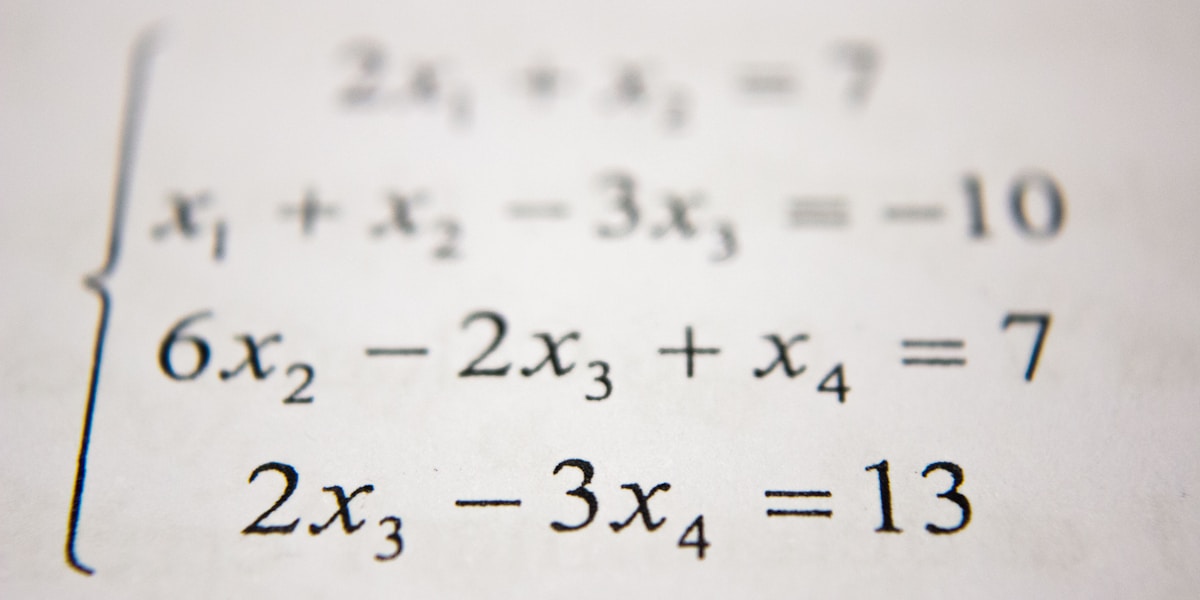
This demands a different relationship with the material. The student must know not only what each equation says but what it means, what its limits are, when it applies and when it does not. They must be able to judge whether a particular approach is appropriate before investing time in it, and they must be willing to abandon a line of reasoning that turns out to be a dead end. These are the habits of a real physicist, and they are exactly what the Olympiad is designed to cultivate.
The Skills That Earn Marks
If you ask an experienced Olympiad marker what they most want to see in a student's answer, they will not say the correct final number. They will say clear reasoning. The mark scheme rewards the quality of a student's thinking, not merely its outcome. A student who shows a well-structured argument, draws a clear diagram, sets up the relevant equations correctly and carries out the algebra with care will earn significant credit even if an arithmetic slip leads to the wrong final answer. Conversely, a student who writes down the correct number without showing how they reached it will earn almost nothing.
This has profound implications for how a student should approach the paper. Every step should be written down. Every diagram should be labelled. Every algebraic manipulation should be shown. The marker cannot read the student's mind, and the student's job is to make their thinking as visible as possible. A well-constructed answer is a narrative: it tells the story of how the student arrived at their conclusion, and it makes that story easy to follow.

There are also specific technical skills that the Olympiad explicitly rewards. Free-body diagrams, drawn neatly and labelled with all the forces acting on a body, are worth their weight in marks. Dimensional analysis, the simple but powerful technique of checking that both sides of an equation have the same units, can catch errors before they propagate and sometimes suggests the form of an answer before any calculation is done. The ability to work in symbols rather than numbers, to carry out algebraic manipulations without substituting values prematurely, keeps the work clean and makes errors easier to find. And the habit of checking limiting cases — asking what happens when a mass goes to zero, or a velocity goes to infinity, or an angle goes to ninety degrees — tests whether an answer makes physical sense.
How the Marking Works
The British Physics Olympiad uses a system of positive marking. Every mark is awarded for something the student has done right, and no marks are deducted for mistakes. This means that a student should attempt every part of every question they can, even if they are not confident of the answer. A partial attempt that shows some correct physics will earn some marks, and those marks accumulate. The student who writes nothing earns nothing, but the student who makes a start, however tentative, has something to show for it.

This is not a licence to guess wildly, but it is an encouragement to be brave. The Olympiad is not an examination in which perfection is expected. The problems are designed so that even the strongest students will not score full marks on every part. The student who treats the paper as a series of opportunities rather than a series of threats will approach it with a lighter mind and, almost always, a higher score.
Learning from Past Papers
The single most effective way to prepare for the British Physics Olympiad is to work through past papers. These are available from the official programme resources, and they are the closest thing a student can get to the experience of the real competition. But the way a student uses past papers matters enormously. Simply reading through a solution and nodding along is almost useless. The real learning happens in the struggle.
The most effective approach is to attempt each problem under conditions that approximate the real paper: set aside uninterrupted time, work without notes or solutions, and commit to writing out a full answer. Only after the attempt is complete should the student turn to the mark scheme or the solution. The comparison between what the student wrote and what the marker expected is where the deepest learning occurs. The student should ask: where did my reasoning diverge from the model answer? Did I miss a physical insight, or did I make a technical error? What would I do differently next time? Over weeks and months, this process builds a mental library of problem-solving patterns that the student can draw on in the competition itself.
Building a Problem-Solving Toolkit
Beyond past papers, there are general techniques that every Olympiad student should master. Dimensional analysis has already been mentioned, but it deserves emphasis: it is the single most underused tool in a student's arsenal, and it can resolve ambiguities, catch mistakes and sometimes solve problems outright. Estimation is another essential skill. An Olympiad student should be able to estimate the order of magnitude of any physical quantity, from the mass of a raindrop to the energy output of the Sun, and they should be able to use these estimates to check whether their calculated answers are plausible.
The principle of superposition, the use of symmetry to simplify a problem, the method of considering a small displacement to test for equilibrium, the technique of transforming to a more convenient reference frame: these are not tricks to be memorised but ways of seeing that become second nature with practice. The student who has built a rich toolkit does not approach a new problem with fear but with curiosity, scanning the situation for features that suggest a familiar approach.
The Mental Game
There is a psychological dimension to Olympiad competition that is too often overlooked. A student who sits down to a paper in a state of anxiety will perform below their ability. A student who treats the paper as a set of interesting puzzles to be solved will bring their full intelligence to bear. This is not a trivial distinction. The Olympiad is designed to be difficult, and difficulty is part of the point. The student who expects to be stumped and greets the experience with curiosity rather than panic has already won half the battle.

Time management is part of this mental discipline. The paper is long, and no student will find every part of every question equally accessible. A sensible strategy is to read through the whole paper at the start, identify the questions that seem most approachable, and begin there. Building confidence on familiar ground before tackling the hardest problems is not a sign of weakness; it is good tactics. And if a problem resists every attempt, the student should move on and return to it later. A fresh look after working on something else often reveals what was hidden.
From Practice to Performance
In the final weeks before the competition, preparation should shift from learning new material to consolidating what is already known and practising the specific skills of performing under timed conditions. A student who has never sat a full-length paper against the clock will find the experience disorienting, and the competition itself is not the place to have that experience for the first time. Timed practice builds the stamina and the pacing that the real paper demands.

It is also important, in those final weeks, to maintain perspective. The Olympiad is a competition, and competition means that there will be winners and there will be students who do not win. But every student who has prepared seriously, who has wrestled with difficult problems and grown in the attempt, has already gained something that no certificate can measure. They have learned to think like a physicist, and that is a permanent acquisition.
A Final Word
The British Physics Olympiad exists to find and encourage young physicists, but its deepest purpose is not to sort students into medal categories. It is to give students a glimpse of what physics really is: not a set of formulas to be memorised, but a way of thinking about the world that is rigorous, creative, and endlessly surprising. The student who walks into the examination room and treats the paper as an invitation to think, rather than a test to be survived, has already understood what the Olympiad is trying to teach. Everything else — the marks, the certificates, the medals — follows from that.
If you are preparing for the British Physics Olympiad, take heart. The problems are hard because they are meant to be hard. The struggle is the point. And every hour you spend wrestling with a problem that seems just beyond your reach is an hour spent becoming the physicist you will one day be.