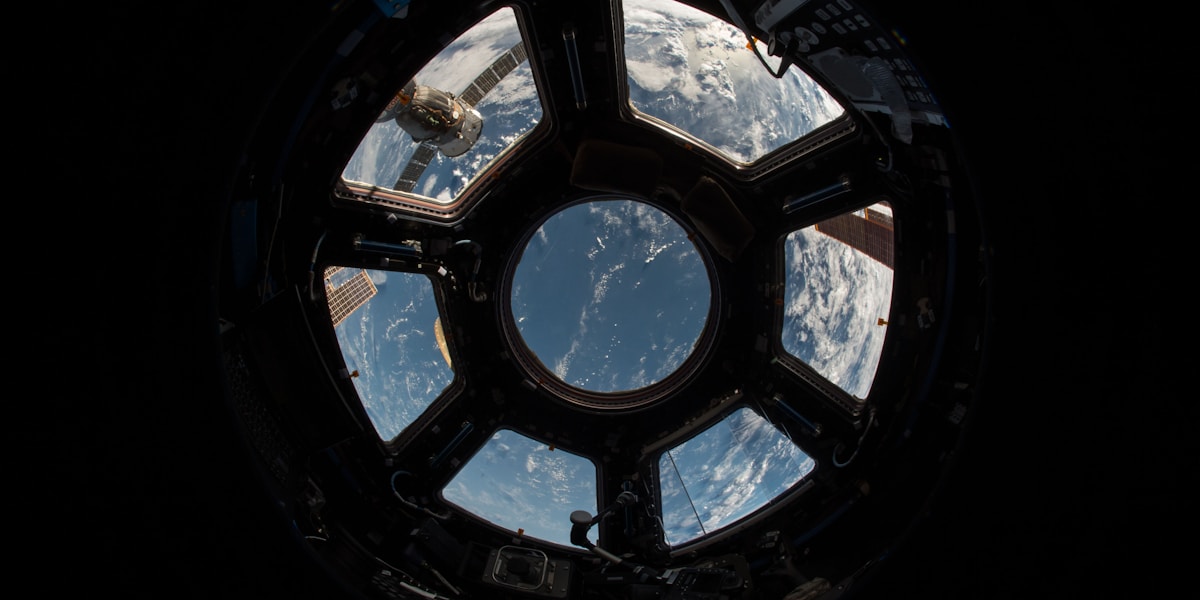
You were born on a certain day, in a certain place, into a certain family, and the world, as far as you were concerned, began then. Everything you remember, everything you know, everything you have ever experienced, has happened in the years since that first breath. And yet this is an illusion, a necessary and forgivable illusion, the illusion of a creature whose memory starts at its own beginning. The truth is that the universe was already unimaginably old when you arrived. It had been preparing for you, in a very literal and physical sense, for thirteen point eight billion years. And if you could rewind the clock, if you could run the film of the cosmos backwards from the moment of your birth, you would travel through a history so vast and so strange and so precisely arranged that it would change the way you understand your own existence. This is that journey backwards. This is the story of everything that had to happen before you could be here.

An Unbroken Chain
Rewind first through the years of your own life, past this morning, past yesterday, past the years of school and the years of childhood, back to the very beginning, and then keep going. You pass your parents as they were before you knew them, younger, uncertain, building a life. You pass your grandparents, and their parents, and theirs, an unbroken chain of mothers and fathers stretching back without a single break, because if even one link in that chain had failed, if even one of your ancestors had not met the right person at the right moment, you would not be here. You are the latest expression of a line of descent that has survived ice ages and plagues and famines and wars, a line that has persisted for hundreds of thousands of years, each generation handing the flame of life to the next. And as you travel further back still, the faces change, the tools change, the languages change, but the thread continues, back through the first farmers, back through the first storytellers gathered around fires, back through the long night of prehistory when your ancestors looked up at the same stars you look up at now and wondered, exactly as you wonder, what it all meant.
The Slow Breathing of the Earth
Keep going. Now you are moving through geological time, and the scale shifts beneath you. The cities dissolve. The continents themselves begin to move, sliding across the face of the Earth like slow rafts, colliding to raise mountain ranges, separating to open oceans. The ice advances and retreats, advances and retreats, a slow breathing of the planet. You pass the age of the great mammals, and before them the age of the dinosaurs, those magnificent animals that ruled the Earth for a hundred and sixty million years, ten times longer than humanity has existed, until an asteroid ten kilometres wide struck the sea off what is now Mexico and ended their reign in a single catastrophe, clearing the way for the small, clever, warm-blooded creatures that would eventually become you. You pass the first forests, the first fish crawling onto land, the first multicellular life, and still you are going back, back, back, through billions of years in which the Earth was a world of bacteria and oceans, of volcanoes and a sky with no oxygen, a planet so different from the one you know that it seems to belong to another universe entirely.
Atoms Older Than Any Planet
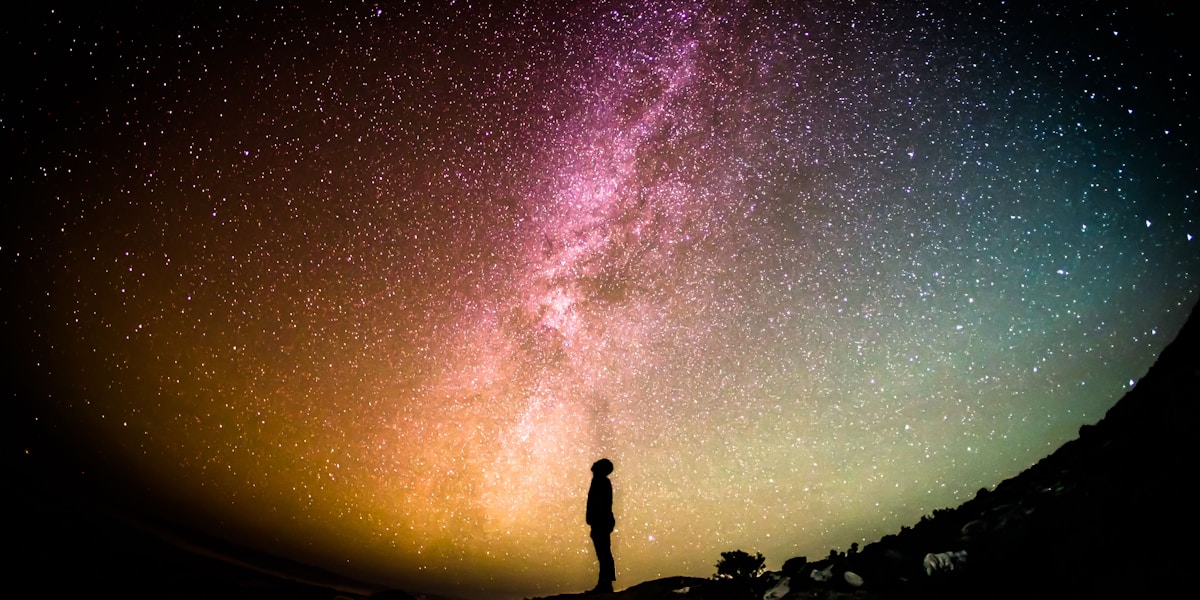
And now you leave the Earth altogether, because to go further back you must follow the matter itself, the actual atoms that make up your body, and their story is older and stranger than the story of any planet. The hydrogen in every drop of water you have ever drunk was made in the first three minutes of the universe, forged in the primordial fire of the Big Bang itself. It is thirteen point eight billion years old, the oldest substance there is, and it is in you right now, in your blood, in your breath, in the water of your cells. But the heavier atoms, the carbon in your muscles, the oxygen you breathe, the calcium in your bones, the iron in your blood, these were not made at the beginning. They were made later, inside stars. This is not poetry. This is physics, measured and confirmed and certain, one of the great discoveries of the twentieth century. The elements of your body were cooked in the cores of stars that lived and died before the Sun was born.
The Furnaces That Forged You
Here is how it happened. A star is a furnace. It shines because, in its core, gravity has squeezed hydrogen so tightly and so hot that the nuclei fuse together, releasing energy, and in the process building heavier elements. Hydrogen becomes helium. Helium becomes carbon and oxygen. In the most massive stars, the fusion continues, layer by layer, building neon and magnesium and silicon and sulphur, all the way to iron, and each of these elements is made in the heart of a star that will never see you, that lived and burned and died billions of years before the Earth existed. And then the star dies. The massive stars die violently, exploding as supernovae, and in those explosions, in temperatures and pressures beyond anything that exists now, the elements heavier than iron are forged, gold and silver and iodine and uranium, and the whole enriched cloud, the ashes of the star's long life and its violent death, is hurled out into space. This cloud drifts for millions of years, cooling, condensing, and eventually, under the pull of gravity, it collapses to form new stars, and new planets, and it carries with it the heavy elements that those first stars made.
Born From the Ashes of Dead Stars
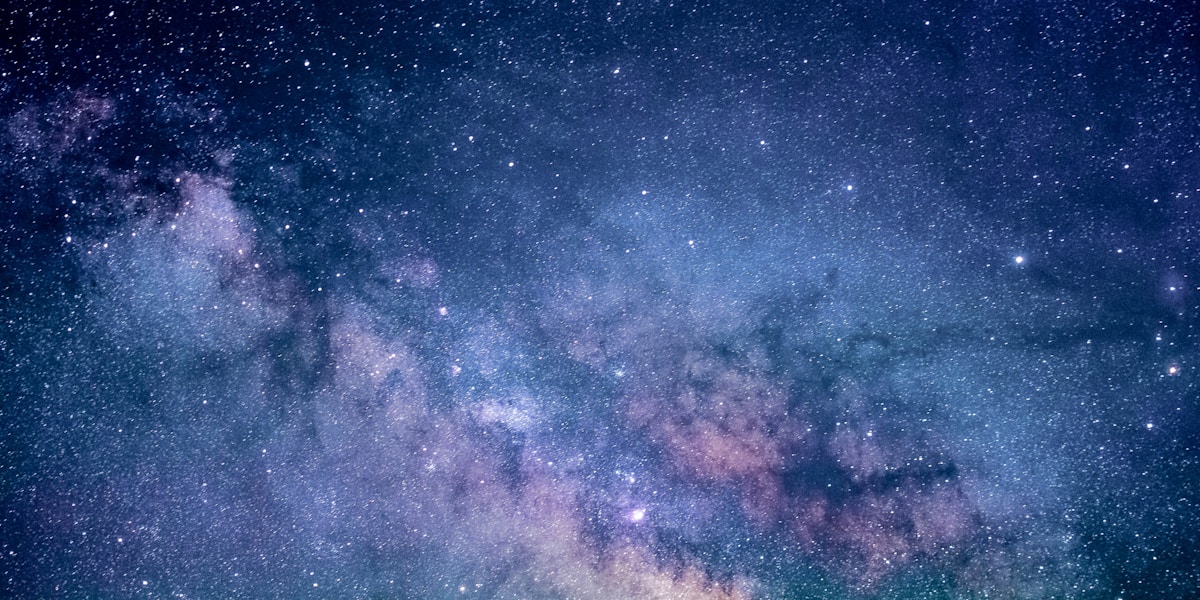
The Sun is one of those later stars. It is a second or third generation star, born about four and a half billion years ago from a cloud of gas that had already been enriched by the deaths of earlier suns. The Earth formed at the same time, condensing from the same cloud, a ball of rock and metal that included within it the carbon and oxygen and iron and all the other heavy elements that generations of dead stars had made. And then, over billions of years, on the surface of that small, warm, wet rock, chemistry became biology, and biology became complexity, and complexity became consciousness, and eventually became you. So when you look at your hand, you are looking at the recycled remains of ancient stars. The iron in your blood was forged in a supernova. The calcium in your bones was made in the core of a star that died before the Sun was born. You are not merely in the universe. You are made of the universe, built from its oldest and most worked-over material, and the history of the cosmos is written in your very substance.
Back to the First Fire
Keep rewinding now, past the formation of the Sun, past the earlier generations of stars, back toward the beginning, and the universe itself begins to change. The stars grow fewer, then vanish, because there was a time before the first star, a time when the universe was dark, filled only with cooling gas and the fading glow of the Big Bang. Go back further and the universe grows hotter and denser. The atoms themselves cannot exist anymore, because it is too hot for electrons to bind to nuclei, and the cosmos is a plasma, a fog of charged particles through which light cannot travel. Go back further still, and the first nuclei are forming, hydrogen and helium assembling themselves in the first three minutes. Further, and there are no nuclei, only a seething soup of fundamental particles. Further, and the universe is so hot and dense that the forces of nature themselves are merged, indistinguishable, and physics as you know it has not yet settled into its present form. And then you reach it, the edge of what can be known, the moment when our current theories fall silent. The Big Bang. The beginning of the expansion, the beginning of space and time as we understand them, thirteen point eight billion years ago. The oldest light in the universe, the afterglow of that first fire, is still travelling, still detectable, and it is the furthest back you can see.
The Universe Contemplating Itself
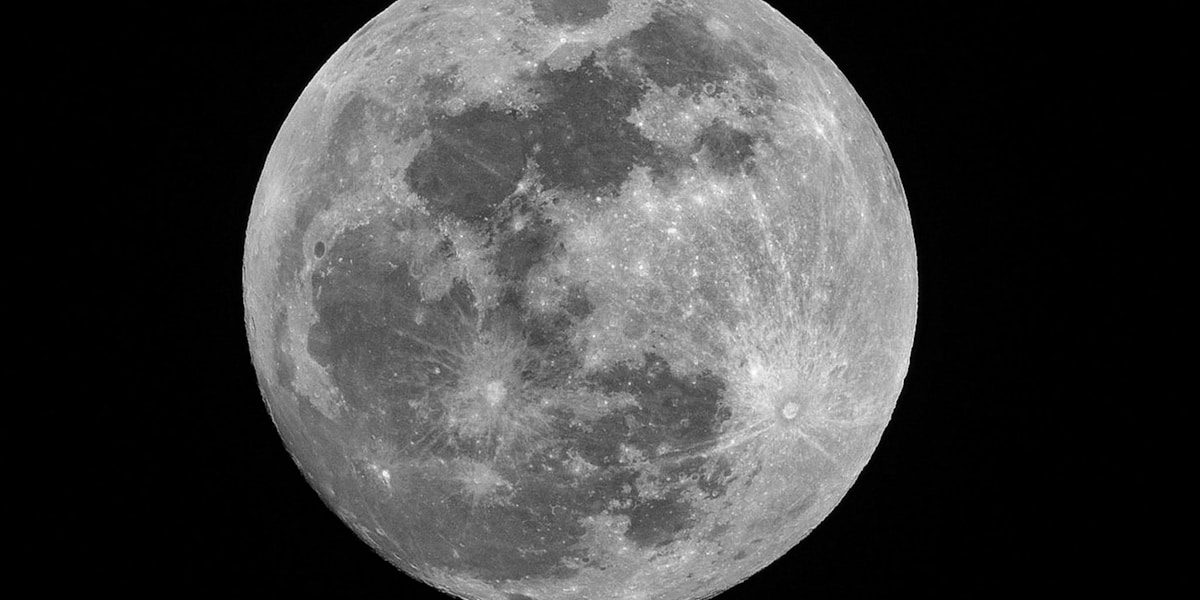
Now run the film forward. This is the astonishing part, the part that should stop you in your tracks. From that first fire, through thirteen point eight billion years of expansion and cooling and structure forming, through the first atoms and the first stars and the first galaxies, through generations of stars living and dying and enriching the cosmos with heavy elements, through the formation of one ordinary star in one ordinary galaxy and one small rocky planet around it, through billions of years of chemistry and evolution on that planet's surface, the universe has been moving, with a kind of terrible and beautiful inevitability, toward this moment. Toward the moment when a collection of its own atoms, arranged in a pattern of extraordinary complexity, would open its eyes and look back at the universe and begin to understand it. You are that moment. You are the universe, having become complex enough to contemplate itself. When you study physics, when you work out the orbit of a planet or the behaviour of a wave or the structure of an atom, it is not a small creature studying a vast universe. It is the universe, through you, studying itself. The equations you solve are the universe's own laws, becoming known to themselves, through the only instrument that has ever been able to know them, a mind.
Physics as Homecoming
This is why physics is not merely a subject, not merely a thing you study for an examination, but a kind of homecoming. When you learn that the same gravity that pulls an apple to the ground holds the Moon in orbit, you are discovering a unity that was always there, a connection between the small world of your hand and the great world of the sky. When you learn that the light from the Sun is the product of nuclear fusion, you are learning the source of the warmth on your face. When you learn that the elements of your body were forged in stars, you are learning your own origin story, a story that is true, that is confirmed by evidence, that is more beautiful than any myth, and that belongs to you whether or not you ever sit an examination. Physics is the discipline of remembering what you are made of and where you came from. It is the universe telling you your own history.
Thirteen Point Eight Billion Years Old
And so, when you sit down to a physics problem, when you take out your pencil and look at the question and feel that familiar mixture of excitement and dread, I want you to remember what you are. You are not just a student taking a test. You are thirteen point eight billion years old, in the sense that the matter of your body is thirteen point eight billion years old, and every atom in you has a history that stretches back to the first moments of the cosmos. You are made of star-stuff, assembled on a small rocky planet around an ordinary star, in a galaxy of two hundred billion stars, in a universe of two trillion galaxies. The odds of your existing at all, of that unbroken chain of ancestors surviving, of that cloud of gas collapsing at the right moment, of that asteroid missing or hitting, are so small as to be almost meaningless. And yet here you are, and you are conscious, and you can understand the very universe that made you. This is the most remarkable fact I know. And the examination, the medal, the university, the career, all of it is secondary to that. Those things matter, but they matter because you matter, and you matter because you are the universe, awake, looking at itself, and trying, with all the stubbornness and the love and the brilliance you can muster, to understand what it sees.
Look Up
So the next time the night sky is clear, go outside and look up. Look at the stars, really look, and remember that you are looking at your own ancestry, at the furnaces that made you, at the clouds your atoms drifted in before they became part of the Earth. Remember that the light reaching your eyes left those stars years ago, decades ago, centuries ago, and that you are seeing the past, because light takes time to travel, and the sky is a museum of old light. Remember that you belong to this scene, that you are not separate from it, that you grew out of it the way a wave grows out of the ocean. And remember that in a few billion years the Sun will swell and redden and the Earth will change, and the stars you see tonight will have moved and died and been replaced, and the cosmos will go on making new stars and new worlds and, perhaps, new minds to look up and wonder. The story that produced you is still being written. It will continue long after you. And for this brief, improbable, luminous interval, you are here, and you are aware, and you can read the story. That is enough. That is everything.