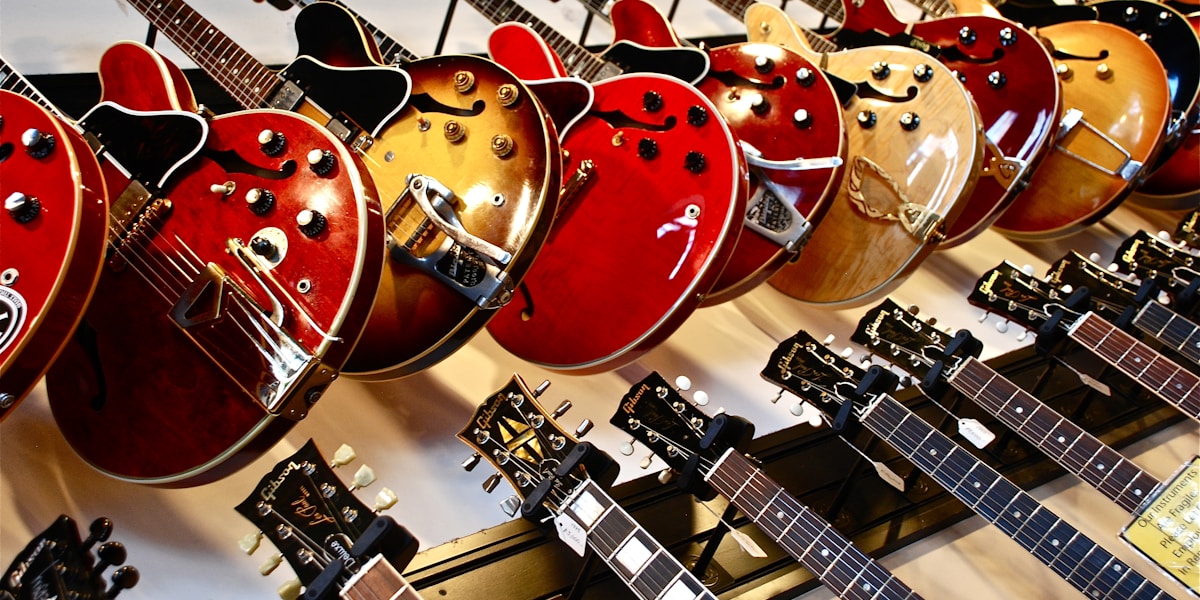
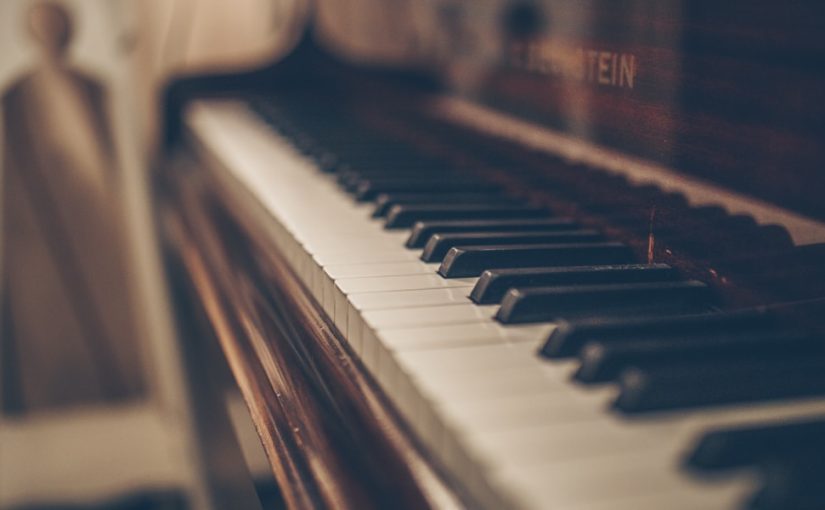
There is a moment, familiar to anyone who has ever sat at a piano or drawn a bow across a string, when the sound stops being a sound and becomes a presence. The note fills the room, fills your chest, fills the small cavity behind your sternum where feeling seems to live, and for a moment you are not thinking about the music, you are inside it, and it is inside you, and the distinction between the listener and the thing listened to dissolves like sugar in warm water. That moment is, depending on who you ask, a spiritual experience or an aesthetic one, a gift of the muses or a trick of the mind. But it is also, and this is the part that never ceases to astonish me, a physical event. It is a pressure wave in the air, a longitudinal oscillation of molecules, a compression and rarefaction travelling at three hundred and forty-three metres per second, striking the tympanic membrane, setting the ossicles in motion, and arriving at the cochlea as a mechanical signal that the inner ear translates, with a fidelity no engineered device has ever matched, into the electrical language of the brain. The moment that feels most transcendent is also the most thoroughly physical. And the fact that these two descriptions, the transcendent and the physical, are not contradictions but are in fact the same event seen from two angles, is one of the deepest and most beautiful secrets that the universe holds.
The story begins, as so many stories do, with a number, and with a man who believed that numbers were the true substance of reality. Pythagoras, in the sixth century before the common era, is said to have noticed that the hammers in a blacksmith's shop rang at different pitches, and that the pitches seemed to correspond to the weights of the hammers. Whether or not that particular legend is true, the discovery it commemorates is real and was genuinely revolutionary. When you pluck a string, it produces a note. If you halve the length of the string, keeping the tension and the thickness the same, the note rises by exactly one octave. The two notes sound different, higher and lower, but they also sound, mysteriously, like the same note, as though they were versions of one another separated by some fixed interval of identity. The ratio between their frequencies is two to one. Halve the length, double the frequency, ascend an octave. The relationship is exact, mathematical, and inescapable. And Pythagoras, standing in whatever workshop or schoolroom it was where this became clear to him, must have felt the ground shift beneath him, because what he had found was not merely a fact about strings. It was evidence that the universe, at its most beautiful, at its most emotional, at the very point where it produces music, is structured by number. Beauty was not arbitrary. Beauty was a ratio. And the ratios were discoverable.

This is the founding insight of both physics and music, and it is worth pausing over, because it is easy to take for granted. Before Pythagoras, the world was governed by capricious gods, and beauty was a matter of taste, of tradition, of the inexplicable preference of the ear. After Pythagoras, beauty had a mathematics. The octave was two to one. The fifth, the most consonant interval after the octave, the interval that anchors almost every melody in almost every musical tradition on Earth, was three to two. The fourth was four to three. The consonances, the intervals that the ear receives as stable and resolved and right, were the intervals with the simplest ratios, and the dissonances, the intervals that create tension and longing and the need for resolution, were the intervals with more complicated ratios. Music was not a human invention imposed on a silent universe. Music was a human discovery of a harmony that was already there, woven into the behaviour of vibrating things, waiting for an ear to hear it and a mind to count it. The musician and the physicist were, from the very beginning, doing the same thing, listening to the world and trying to hear the pattern underneath.
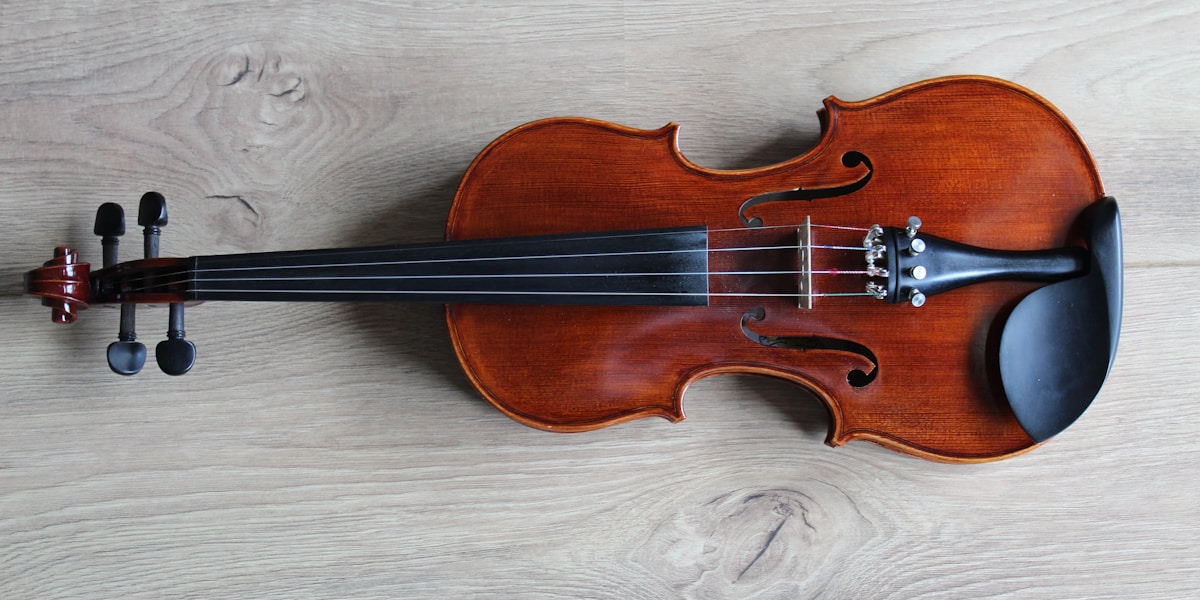
Consider what actually happens when a violin string is drawn by a bow. The bow, coated in rosin, grips the string and pulls it sideways, and when the restoring force of the stretched string overcomes the friction of the bow, the string snaps back, only to be caught again by the bow and pulled once more. The result is a periodic motion, a repeating cycle, and the frequency of that cycle determines the pitch of the note. But the string does not vibrate in a single, simple way. It vibrates simultaneously in many ways at once. It swings back and forth as a whole, producing the fundamental frequency, the note you hear and name. But it also vibrates in halves, in thirds, in quarters, in fifths, each of these modes producing a higher frequency, a harmonic, an overtone, and all of these vibrations coexist, layered on top of one another, and the particular mixture of them, the relative strength of the fundamental and the various overtones, is what gives the violin its particular sound, its timbre, its unmistakable voice. A violin and a flute can play the same note, the same fundamental frequency, and yet sound entirely different, because the orchestra of overtones that accompanies the fundamental is different for each instrument. The timbre is a spectrum. And the spectrum is physics.
This is why a concert hall is a laboratory, whether or not the people in it realise they are conducting an experiment. When an orchestra plays, it is setting the air in motion in extraordinarily complex ways, superposing hundreds of frequencies, thousands of overtones, and sending them out into a space whose shape and surfaces and materials have been tuned, over centuries of trial and error and, increasingly, of deliberate acoustic engineering, to reflect and absorb and diffuse those waves in the way that produces the richest, most balanced, most alive sound. The concert hall is a boundary value problem. The music is a solution to a wave equation. And the reason a Stradivarius sounds like a Stradivarius, the reason those eighteenth-century violins have a voice that modern instruments struggle to match, is a question that has occupied physicists and luthiers and chemists for generations, a question about wood density and varnish and the geometry of the f-holes and the resonant modes of the body, a question that is, at bottom, a question in physics. The instrument is a resonator. The music is standing waves. And the beauty is real, and measurable, and no less beautiful for being measurable.
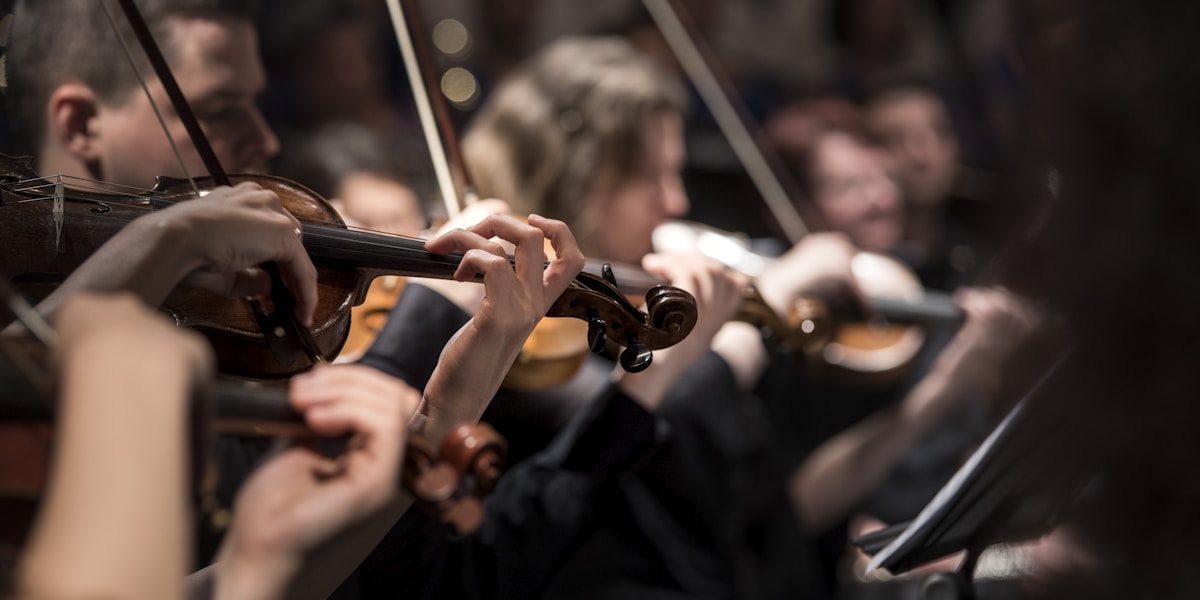
There is a concept in physics that musicians know intimately without ever calling it by its technical name, and that concept is resonance. Every object has a natural frequency, a frequency at which it prefers to vibrate, a frequency determined by its size and its shape and its stiffness and its mass. Push it at that frequency, even gently, even with a small force repeated at the right moment, and the vibration grows and grows, because each push arrives in phase with the motion that is already there, adding energy to it, amplifying it. This is resonance, and it is one of the most powerful and most dangerous phenomena in all of physics. It is the reason a singer can shatter a wine glass, by finding the glass's natural frequency and driving it with enough power that the amplitude of the vibration exceeds what the glass can withstand. It is the reason the Tacoma Narrows Bridge tore itself apart in 1940, because the wind set up an oscillation that matched the bridge's natural frequency and drove it to destruction. And it is the reason music works. Your ear is a resonance detector. The cochlea is a tapered tube lined with hair cells of varying stiffness, each one tuned to a different frequency, so that when a sound enters, the hair cells that match the frequencies in the sound respond, and the others do not, and the pattern of response is the sound, decomposed, analysed, understood. You hear music because your body is a bank of resonators, and the music is driving them.
And resonance is not just a phenomenon of strings and bridges and eardrums. It is the deepest mechanism by which the universe transfers energy, and it is the mechanism by which we connect to music emotionally. When a piece of music moves you, when a particular chord or a particular phrase produces that tightening in the throat, that prickling at the back of the eyes, that sense of being suddenly and inexplicably opened up, something is resonating. Not in the acoustic sense, or not only in the acoustic sense, but in a deeper sense, a sense that the music has found a frequency that matches something in you, some pattern of memory and expectation and longing, and is driving it, amplifying it, making it visible. Musicologists and neuroscientists have studied this, the chills, the frisson, the moment of peak emotional response, and they have found that it is often associated with a violated expectation, a note that arrives a beat late or a beat early, a harmony that departs from the pattern the ear has learned to predict and then returns to it. The emotion is the feeling of a prediction being made and then broken and then fulfilled. It is, in other words, a pattern, and the pleasure of the pattern is the pleasure of recognition, the same pleasure that a physicist feels when a set of equations suddenly simplifies, when the complexity resolves into structure, when the hidden order reveals itself.
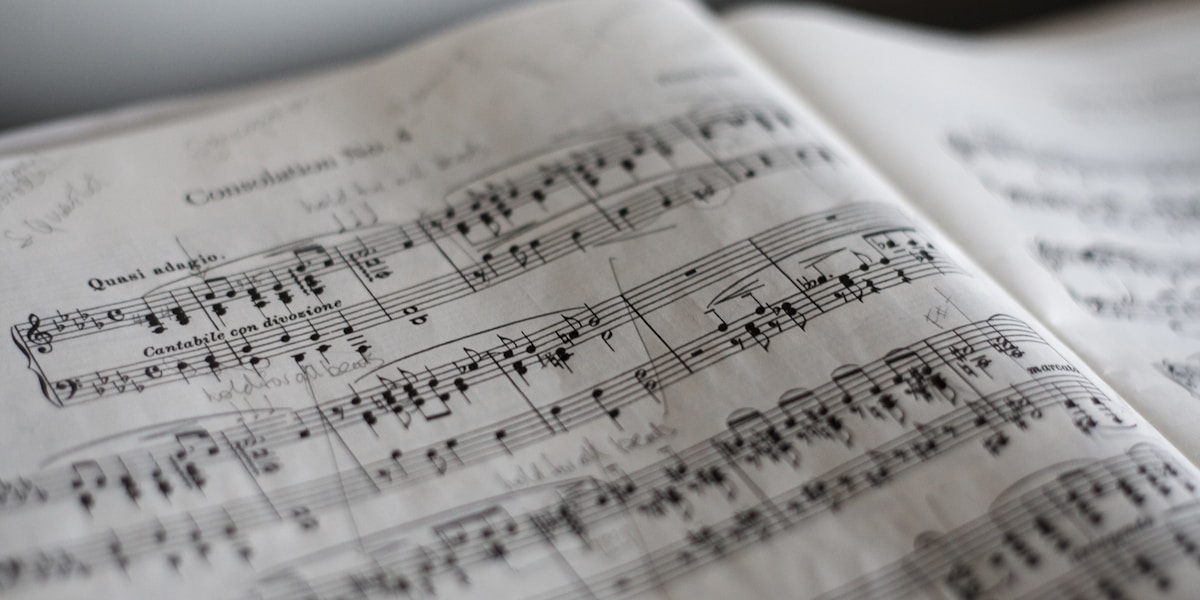
The connection between physics and music is not only metaphorical, though the metaphors are rich and rewarding. It is literal, practical, and inescapable. Every musical instrument is a physics experiment. The guitar is a system of coupled oscillators, the strings driving the soundboard, the soundboard driving the air in the body, the body radiating sound. The flute is a column of air with a set of boundary conditions, open at one end, effectively closed at the other, and the notes it produces are the resonant modes of that column, the standing waves that fit. The drum is a two-dimensional version of the same problem, a membrane with fixed edges, and the mathematics of its modes, the Bessel functions that describe the vibration of a circular membrane, are the same mathematics that appear in quantum mechanics, in the description of the electron orbitals around a hydrogen atom. The physics of the drum and the physics of the atom share a mathematics, and this is not a coincidence, because both are wave phenomena, and wave phenomena, wherever they occur, obey the same underlying logic. To understand music is to understand waves, and to understand waves is to hold one of the master keys to the physical universe, because the universe, at the deepest level we have yet been able to probe, is made of waves.
And this brings us to the most astonishing part of the story, the part where the connection between physics and music stops being a pleasing analogy and becomes something closer to identity. In the twentieth century, physics discovered that matter itself is not made of particles in the simple, billiard-ball sense that Newton imagined. Matter is made of quantum fields, and the excitations of those fields, the things we call particles, behave like waves. The electron in an atom does not orbit the nucleus the way a planet orbits the sun. It exists as a standing wave, a probability distribution, a pattern of amplitude wrapped around the nucleus, and the allowed patterns, the allowed energy levels, are determined by the same mathematics that determines the allowed modes of a vibrating string. The hydrogen atom is a musical instrument. It has resonant frequencies. It has overtones. When an electron drops from one energy level to another, it emits a photon whose frequency corresponds to the difference between the levels, and the set of frequencies that a given atom can emit is its spectrum, its unique signature, its voice. Astronomers identify the chemical composition of stars billions of light-years away by listening to this voice, by reading the spectrum, by hearing, across the unimaginable distances of space, the note that the star is singing. The universe is not silent. The universe is music, and physics is the art of hearing it.
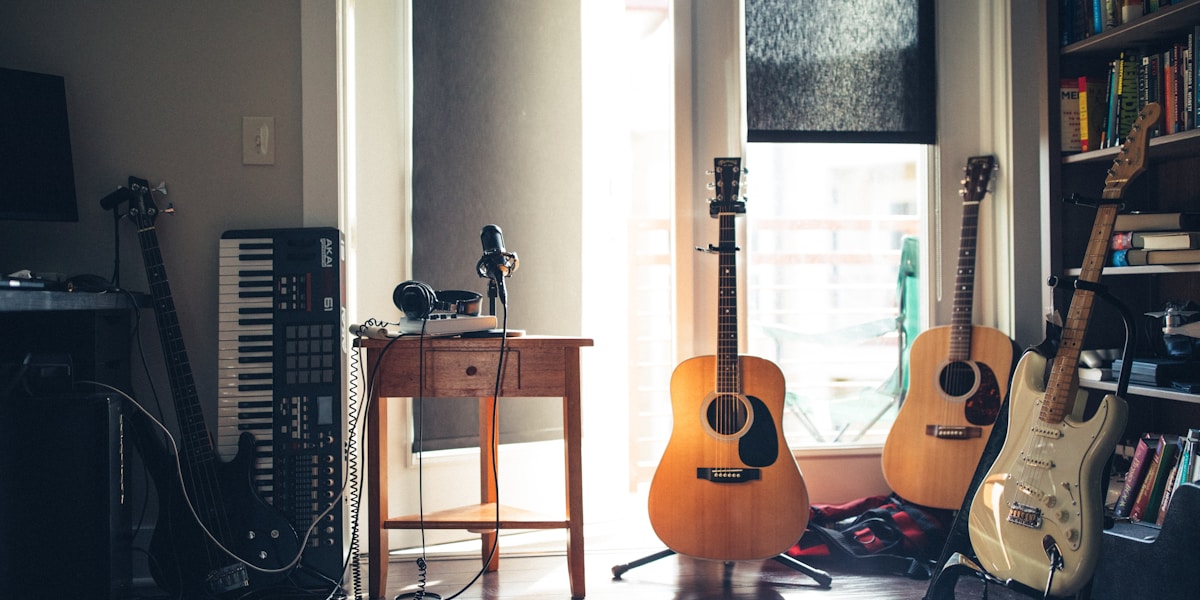
There are people who move between these two worlds, physics and music, with a fluency that suggests the border between them is thinner than we suppose. Einstein played the violin, famously, devotedly, and said that if he had not been a physicist he would have been a musician, and that he often thought in music and saw his life in terms of music. Brian May, the guitarist of Queen, holds a doctorate in astrophysics, and returned to complete it decades after the band's greatest success, as though the two halves of his mind had each been waiting for the other. There is a long tradition of physicists who play music and musicians who study physics, and the overlap is too large and too persistent to be an accident. The reason, I think, is that both disciplines are engaged in the same fundamental activity, which is the discovery and the creation of structure. The physicist looks at the chaos of phenomena and seeks the pattern, the law, the equation that makes it coherent. The musician takes the silence and imposes a pattern on it, a melody, a harmony, a rhythm, and in doing so creates something that was not there before but that feels, in the hearing, inevitable, as though it had always been there, waiting. Both are acts of attention. Both are acts of love. Both require the same combination of rigour and imagination, the same willingness to sit with difficulty, the same faith that beneath the surface of things there is an order that is worth finding.
And there is one more connection, the most personal one, the one that matters most to anyone who has ever prepared for a physics competition while also loving music. Both disciplines teach you about time. Music is an art form that exists in time, that cannot be grasped all at once, that must be experienced sequentially, moment by moment, the way a river is experienced. You cannot hear a symphony the way you can look at a painting, taking in the whole at a glance. You must submit to its duration, must give it the minutes and the hours it requires, must be willing to be carried. And physics, too, is a discipline of time. Understanding does not arrive all at once. It accumulates, slowly, the way a melody accumulates, the way a theme develops, the way a set of variations explores a single idea from every angle until the idea is exhausted and transcended. You cannot rush it. You cannot skip to the resolution. You must sit with the dissonance, must endure the tension, must trust that the pattern will resolve, because it will, because it always does, because that is what patterns do.
So the next time you hear a piece of music that moves you, the next time a chord or a phrase opens something up inside you that you did not know was closed, remember what is actually happening. Remember that the air between the instrument and your ear is oscillating, that the molecules are compressing and rarefying in a pattern of extraordinary complexity and precision, that the pattern was designed, shaped, refined, by a human mind that understood, consciously or not, the physics of resonance and expectation and release. Remember that your ear is a masterpiece of acoustic engineering, a Fourier analyser made of bone and membrane and fluid, decomposing the sound into its constituent frequencies with a resolution that no digital device can match. Remember that the emotion you feel is not separate from the physics but is the physics, experienced from the inside, the way a wave looks when you are the medium it is travelling through. And remember that the person who first noticed that halving a string raises the pitch by an octave, that beauty was a ratio, that the universe was made of number, was not reducing music to mathematics. They were discovering that the mathematics and the music were the same thing all along, that the ratio and the feeling, the equation and the emotion, the wave and the wonder, are two names for one reality. The hidden harmony is not hidden. It is everywhere. You have only to listen.