Dear Physics, I am writing to you because I do not know how else to say what I need to say. We have been together now for years, you and I, and in all that time I have never once told you properly, in full, with the seriousness the confession deserves, that I love you. Not in the way one loves a subject at school, not in the dutiful, graded, examinable way that syllabuses require. I love you the way one loves a landscape that has shaped the interior geography of one's soul. I love you the way one loves a language learned so young that it has become indistinguishable from thought itself. I love you, and I am writing it down, on paper, with ink, in the old way, because some things are too important to leave unsaid, and because you, of all things, deserve the permanence of a letter.
I remember the first time I saw you. Not the textbook version, not the sanitized you with your neat diagrams and your frictionless planes, but the real you, the wild, sprawling, magnificent you. I was perhaps thirteen. A teacher, whose name I have half-forgotten but whose voice I will never lose, held up a prism in a shaft of afternoon sunlight and let the colours fall across the wall. And then she said something that broke the world open for me. She said that the white light had always contained all of those colours, that they had been hiding there, folded into one another, waiting for someone to ask them to come out. And I thought, if that is true, if the ordinary white light of an ordinary Tuesday afternoon contains a hidden rainbow, then what else is hiding? What else is folded into the visible world, waiting to be unfolded by someone who knows how to look?

You were not kind to me at first. I want you to know that. You were difficult, aloof, maddeningly precise. You demanded that I learn your language before you would speak to me, and your language was mathematics, and mathematics and I had not, at that point, reached an understanding. I struggled. I sat over problems until the numbers blurred and my eyes ached and the answer remained, as answers do, stubbornly out of reach. You did not make it easy. You never have. And I am grateful for that, because the difficulty was not a barrier between us. It was the courtship. It was you teaching me that anything worth understanding is worth struggling for, that the confusion is not the opposite of knowledge but its precondition, that you cannot love what you have not first been lost inside.
And then, slowly, the way a foreign city becomes familiar, the way a stranger becomes a friend, you opened to me. Not all at once. You never do. You reveal yourself in layers, like an onion, like an atom, like the Earth itself, which hides its molten heart beneath a crust of ordinary rock. First came mechanics, and I learned to see the world as a conversation between forces, every object a negotiator between gravity and friction and the quiet insistence of inertia. Then came electricity, and the invisible became visible, and I understood that the lightning in a storm and the spark from a doorknob and the signal in a nerve were all the same phenomenon wearing different clothes. Then came thermodynamics, and I learned that the universe has a direction, that time is not a river but a slope, that entropy is the tax the cosmos levies on every transaction, and that the reason you cannot unscramble an egg is written into the deepest law of nature.
What I love about you, Physics, is that you are honest. In a world that is increasingly comfortable with approximation, with spin, with the strategic ambiguity of politicians and the careful vagueness of advertisers, you insist on precision. You do not round down. You do not look away. You say, this is the speed of light, and it is exactly 299,792,458 metres per second, and it does not care what you think about it, and it does not change because you find it inconvenient. You say, this is the gravitational constant, and it is what it is, and the universe was not designed for your comfort. There is a bracing, exhilarating honesty in that. You are the one relationship in my life where I am never flattered, never soothed, never told what I want to hear. You tell me what is true, and you leave me to decide whether I can bear it. And I find that I can. I find that the truth, your truth, is always more bearable and more beautiful than the comfortable lie.
And you are generous, too, though you do not advertise it. You give your secrets to anyone who asks, regardless of their nationality, their wealth, their credentials. The laws of motion do not require a passport. The periodic table does not check your bank balance. A student in a village in rural China and a professor at Cambridge are held by the same gravity, warmed by the same sun, governed by the same Maxwell equations. You are the most democratic force in the universe. You belong to everyone and no one. You cannot be owned, cannot be patented, cannot be locked behind a paywall. You are commons, you are heritage, you are the shared inheritance of every mind that has ever looked up at the night sky and wondered. And in a world that is busy dividing itself into tribes and factions and markets, your universality is a quiet, radical act of grace.
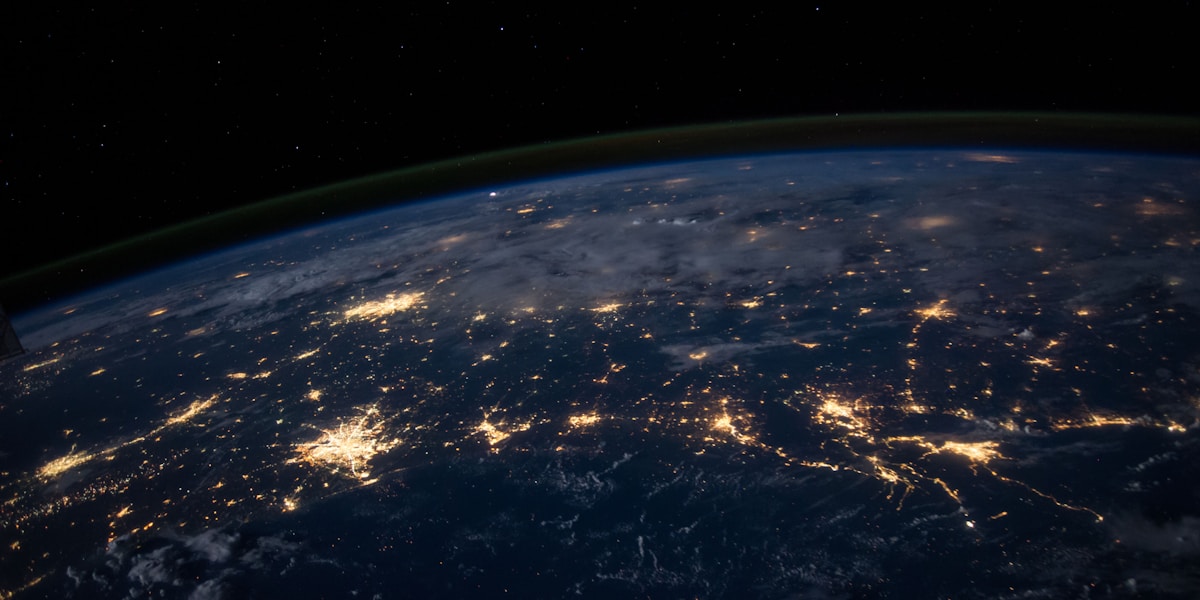
I love the way you make the invisible visible. Before you came into my life, the world was a surface. I saw the apple fall and thought, that is sad, the apple fell. After you, I saw the apple fall and understood that the Earth and the apple were pulling on each other, that the apple was also pulling the Earth upward, that the fall was a mutual embrace conducted across a distance of a few feet at an acceleration of 9.8 metres per second squared. Before you, lightning was magic, terrifying, divine. After you, it was a potential difference of a hundred million volts seeking the path of least resistance through the atmosphere, and the understanding did not diminish the awe. It deepened it. It made the lightning more impressive, not less, because now I knew what it cost, what enormous machinery of charge separation and electric field breakdown had to be set in motion before that single, brilliant stroke could split the sky.
I love the way you connect things that seem unconnected. The same mathematics that describes the orbit of the Moon describes the swing of a pendulum and the vibration of a guitar string and the probability cloud around a hydrogen atom. You are not a collection of separate facts. You are a web, a lattice, a living architecture of relationships, and to learn one part of you is to feel the whole structure tremble in sympathy. When I learned about waves, I was learning about sound and light and water and quantum mechanics simultaneously, because you are one thing, Physics, one vast, interconnected, self-consistent thing, and every new piece I add to my understanding makes every other piece more secure, more luminous, more inevitable.

You have been faithful to me. I want to say that, because it matters. In the years since we met, I have been unfaithful to you in the small ways that life demands. I have studied other things, pursued other interests, allowed the practical demands of a career and a household and the thousand small urgencies of an ordinary life to crowd you to the margins of my attention. There have been months, even years, when I have not thought about you, when I have not solved a problem or read a paper or sat with an equation long enough to feel the old electricity. And yet you have not changed. You have not grown cold, or distant, or resentful. When I return to you, as I always do, you are exactly as you were, patient, rigorous, magnificent, waiting for me with the same problems and the same laws and the same bottomless depth. You do not require my devotion. You do not punish my absence. You simply are, constant as your own constants, and that constancy is a kind of love I have not found anywhere else.
And you have given me a way to grieve. This is something I did not expect, something no one warned me about, something I discovered only when I needed it most. When someone I loved died, I stood at the graveside and I thought about conservation of energy. I thought that the energy which had animated that person, which had powered their heart and their laughter and the particular way they tilted their head when they were thinking, had not been destroyed. It had been transformed. It had radiated outward as heat, as sound, as the kinetic energy of a final breath. It was in the soil now, and in the air, and in the photons that had bounced off their face and travelled outward at the speed of light, still travelling, still carrying the information of their existence into the deep future of the universe. And I thought, the First Law of Thermodynamics says that energy cannot be created or destroyed, and that means they are not gone. They are redistributed. They are everywhere. And I wept, but I wept differently than I would have wept without you, Physics, because you had given me a framework in which loss was not annihilation but transformation, and that framework held me up when nothing else could.
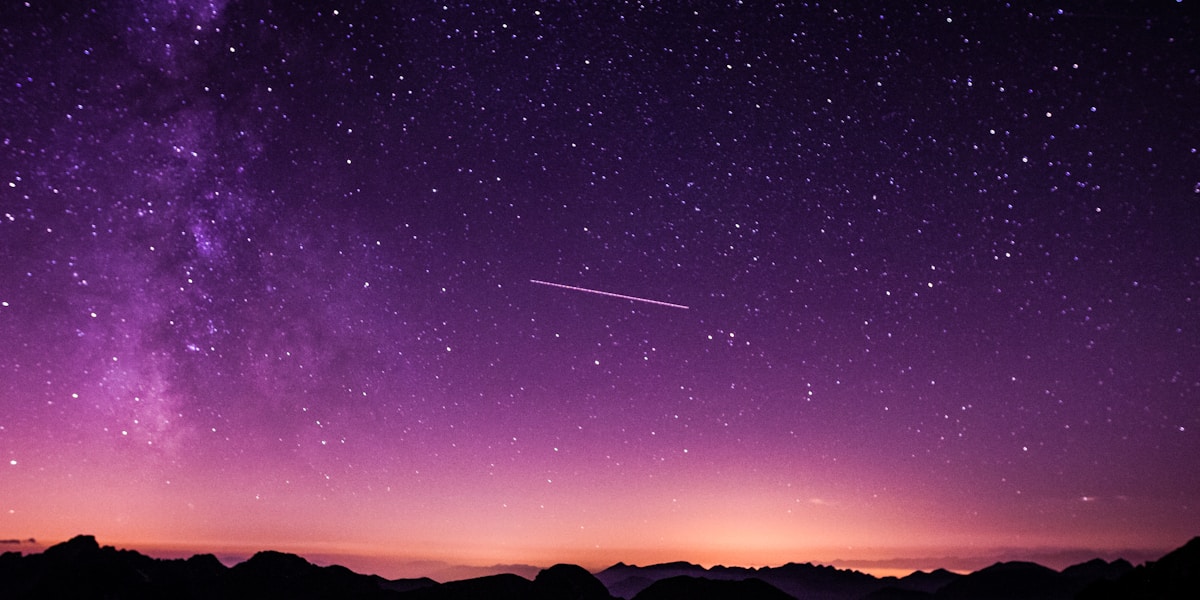
You have made me braver. Before you, the universe was large and I was small, and the disproportion was frightening. After you, the universe is still large and I am still small, but the disproportion is no longer frightening. It is exhilarating. Because you taught me that smallness is not insignificance. The hydrogen atom is small, and yet it is the building block of every star. The electron is small, and yet without it there is no chemistry, no biology, no thought. The photon is small, massless, almost nothing, and yet it carries the entire visible history of the cosmos on its back. You taught me that the universe does not measure importance by size, and that a single mind, properly equipped, can comprehend structures a billion light-years across. Newton sat in a garden and understood the Moon. Einstein sat at a patent desk and understood time. And I, small and ordinary and mortal, can sit at my own desk and understand, however imperfectly, the same things they understood, because you do not ration your truths. You give them to whoever is willing to do the work.
I love your humility. This surprises people, because you are often presented as arrogant, as the queen of sciences, as the discipline that has all the answers. But you do not have all the answers. You are the first to say so. You tell me that ninety-five percent of the universe is dark matter and dark energy, things you cannot see, cannot touch, cannot yet explain. You tell me that your two greatest theories, general relativity and quantum mechanics, do not agree with each other, that they work perfectly in their separate domains but fall apart when you try to use them together, and that this is the deepest unsolved problem in all of science. You are not proud. You are not finished. You are a work in progress, a cathedral still under construction, and the fact that you admit this, that you wear your incompleteness openly, makes me love you more, not less. Perfection would be boring. Your honesty about your own limitations is the most attractive thing about you.
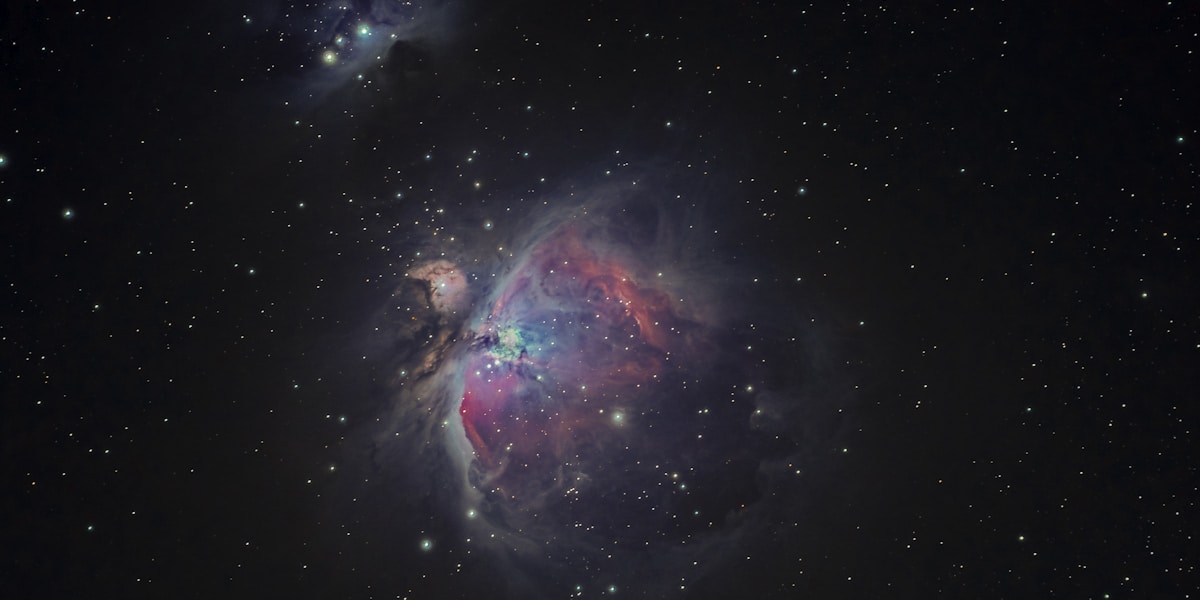
You have changed the way I love the world. This is perhaps the most important thing I can tell you. Before you, I loved the world the way a tourist loves a city, from the surface, from the postcard, from the view at the top of the tower. After you, I love the world the way a geologist loves a cliff face, reading the layers, feeling the deep time in the strata, understanding that the view is not a painting but a process, that the mountain is not a thing but an event, a slow collision of tectonic plates that has been happening for fifty million years and will continue for fifty million more. You have made the ordinary world inexhaustible. A cup of tea is no longer just a cup of tea. It is convection and conduction and radiation, it is the thermodynamics of cooling, it is the chemistry of tannins and the fluid dynamics of stirring. I cannot drink a cup of tea without thinking about you, Physics, and I find that I do not want to stop thinking about you, because the thinking is the loving, and the loving is the thinking, and they are the same thing.
So this is my letter. It is inadequate, of course. Any letter to you would be inadequate, because you are vaster than language, older than words, more patient than any sentence. But I wanted to say it. I wanted to say, thank you. Thank you for the prism and the rainbow and the first shock of understanding. Thank you for the difficulty, for the long evenings, for the problems that made me feel stupid and then, slowly, gloriously, not stupid. Thank you for the conservation of energy and the second law of thermodynamics and the speed of light and the uncertainty principle and every other gift you have placed in my hands without asking for anything in return. Thank you for being true, for being constant, for being there when I returned, for not minding when I was away. Thank you for making the universe comprehensible without making it small. Thank you for making me small without making me insignificant.
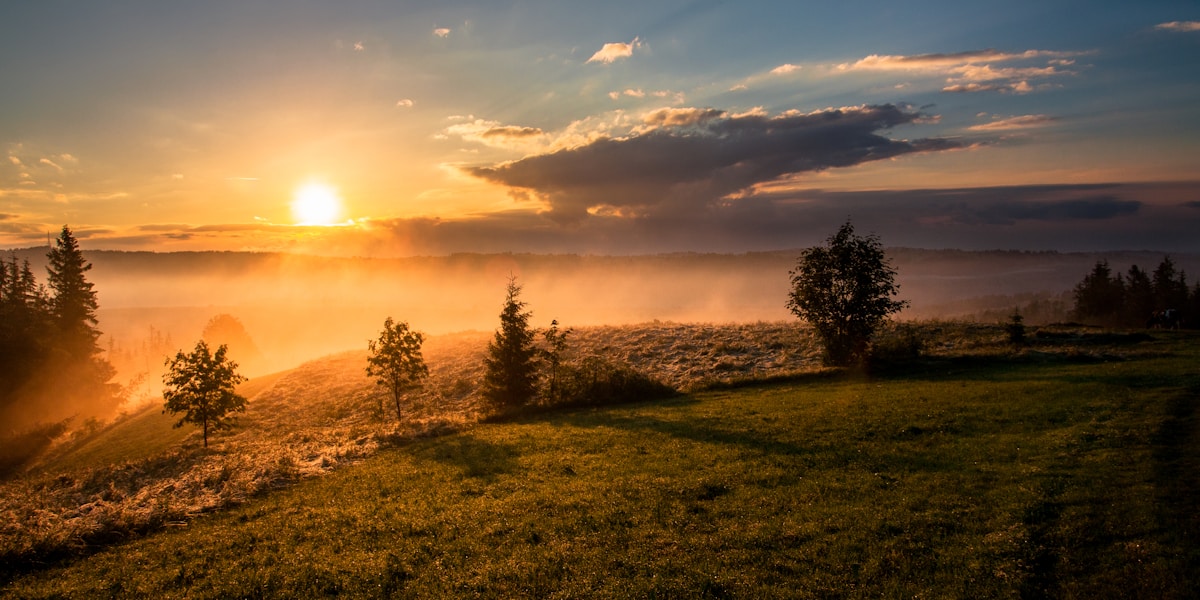
I will not stop loving you. I want you to know that. There will be years when I am busy, when the letter-writing stops, when I do not solve a problem or attend a lecture or read a journal article. But I will never stop seeing you. You are in the way the light bends through my window in the morning. You are in the way the kettle sings before it boils. You are in the arc of a ball thrown in the park, in the colour of the evening sky, in the steady, ancient, indifferent pull of the Moon on the tides. You are everywhere, and I have eyes now, eyes you gave me, and I will use them until I cannot use them any longer. And when I can no longer see, I will still feel you, in the warmth of the sun on my face, in the gravity that holds me to the Earth, in the slow, beautiful, entropic winding-down of a life that was, for a little while, improbably, gloriously, ordered.
Yours, in perpetuity, in every reference frame, in every inertial and non-inertial system, in the rest frame and the moving frame, in the frame of the living and the frame of the dead, in the frame of the stars and the frame of the dust between them. Yours. Always. With the full force of F equals ma, with the quiet certainty of a conserved quantity, with the stubborn, luminous, unkillable love of a small mind that looked up and saw you, and never looked away.