
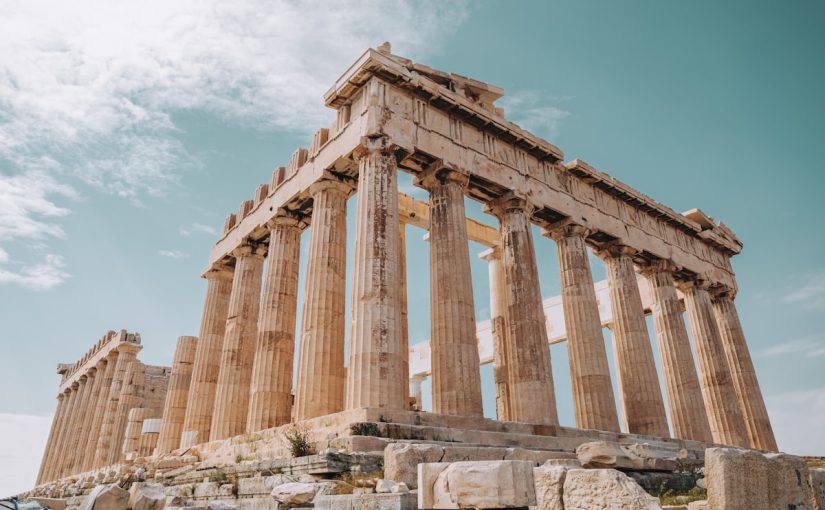
Every July, as summer settles over the Northern Hemisphere, a remarkable migration takes place. Hundreds of the world's most talented young physicists, along with their mentors and supporters, board aeroplanes bound for a single destination: the host city of that year's International Physics Olympiad (IPhO). Over the course of a week, the city becomes a temporary capital of global science — its university halls transformed into examination rooms, its streets filled with the chatter of a hundred languages, its evenings alive with the shared excitement of young minds pushing the boundaries of their understanding. But the IPhO is not merely a competition; it is also a journey, a cultural encounter, and a rare opportunity to see the world through the lens of physics. In this article, we take a journey through some of the most memorable host cities in the history of the Olympiad, exploring what each place brought to the competition and what the students took away.
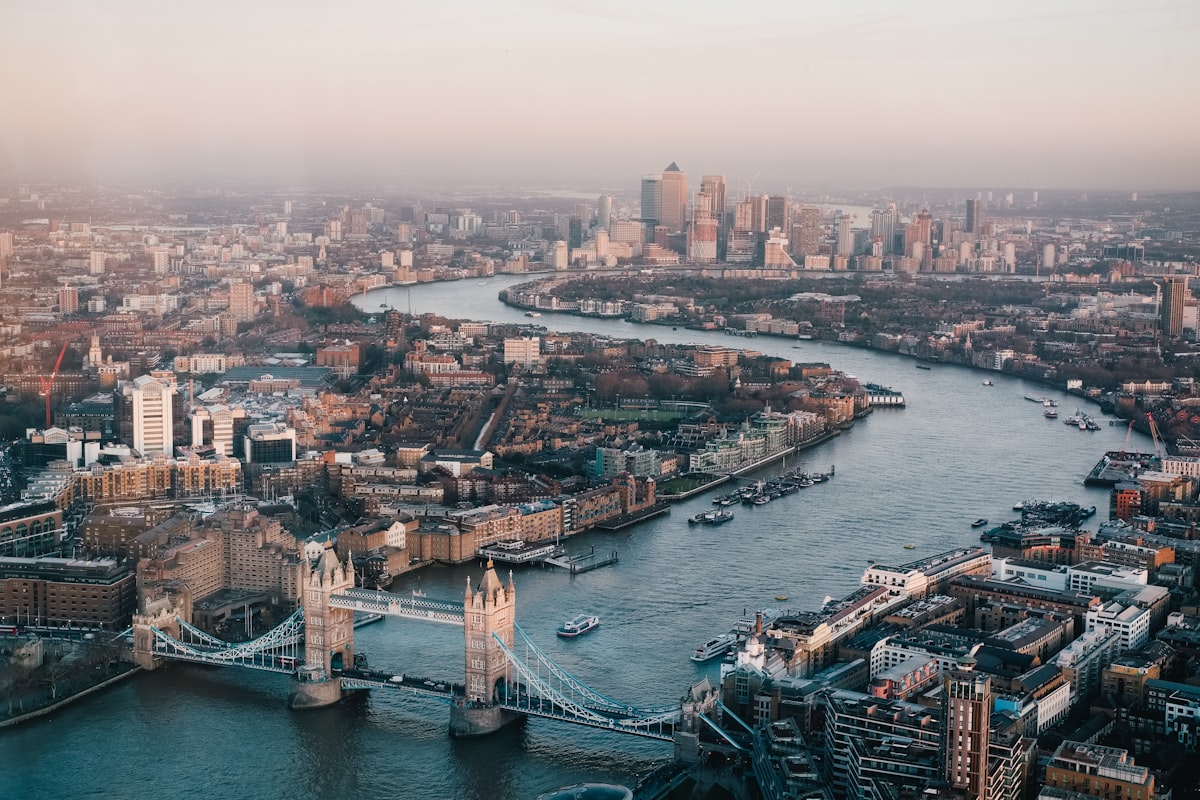

London, United Kingdom: Where Science Meets History
The United Kingdom has hosted physics olympiad events on multiple occasions, and London in particular carries the weight of a scientific tradition that stretches back centuries. It is impossible to walk along the South Bank without thinking of the great minds who once worked in these streets — Newton, Faraday, Maxwell, Dirac, Hawking — each of whom transformed our understanding of the physical world. When young physicists visit London for a competition or training event, they are walking in the footsteps of giants, and the city has a way of making that inheritance feel tangible.
For the UK students who grow up in the BPhO system, London often represents the culmination of their journey. The training camp at Oxford may be the intellectual heart of the programme, but London is where the team sometimes gathers before departing for the international stage, and where the broader physics community — the Royal Society, the Royal Institution, the Institute of Physics — maintains its headquarters. The city hums with a particular kind of intellectual energy that is hard to find elsewhere, and the students who pass through it often carry a lasting impression of what it means to be part of a tradition that values curiosity above all else.

Paris, France: The City of Light and Ideas
France has long been one of the great centres of physics, and Paris in particular has played host to some of the most important developments in the field. The Curies conducted their pioneering work on radioactivity here. The city was a crucible of the Enlightenment, where reason and empirical investigation first began to displace superstition as the dominant modes of understanding the world. When the IPhO comes to France, it arrives in a place that has always taken its intellectual life seriously, and the students who compete here often remark on the particular atmosphere of a city where cafés have been the meeting places of scientists and philosophers for centuries.
For European students, a trip to Paris for the IPhO is more than a competition — it is a cultural experience. The city invites you to wander its streets, to visit the Panthéon where so many great French scientists are buried, to stand before the Foucault pendulum at the Musée des Arts et Métiers and watch it trace its slow, patient arc across the floor. The pendulum is a reminder that physics is not just about equations and exam papers — it is about seeing the world clearly, and Paris, with its extraordinary light and its layered history, is a city that teaches you to see.
Zurich, Switzerland: Where Einstein Walked
Switzerland has hosted the IPhO on multiple occasions, and Zurich in particular carries a special significance for anyone who loves physics. It was here, in a small apartment on Kramgasse and later in the patent office just down the road, that Albert Einstein developed the special theory of relativity in 1905. The city itself is compact, orderly, and unassuming — qualities that seem to mirror Einstein's own approach to physics: clear, elegant, and free of unnecessary complication.
Students who visit Zurich for the IPhO often make a pilgrimage of sorts to the ETH (Eidgenössische Technische Hochschule), where Einstein studied and later taught. The building is imposing but not ostentatious, and the surrounding streets have a quiet, scholarly atmosphere that is conducive to deep thought. Walking along the banks of the Limmat, with the church spires reflected in the water, it is not difficult to imagine the young patent clerk turning over the problems of light and time in his mind, arriving at conclusions that would reshape our understanding of the universe.
Tokyo, Japan: Precision, Tradition, and the Future
The 53rd International Physics Olympiad was held in Tokyo in July 2023, and the event left a lasting impression on all who attended. Japan has a distinguished tradition in physics — home to Nobel laureates such as Hideki Yukawa, Leo Esaki, Yoichiro Nambu, Makoto Kobayashi, Toshihide Maskawa, and Isamu Akasaki — and the IPhO in Tokyo reflected the country's characteristic blend of precision, discipline, and quiet innovation.
The competition itself was, by all accounts, superbly organised. The examination problems were elegant and demanding, the laboratory facilities were state-of-the-art, and the cultural programme introduced the students to aspects of Japanese life that many of them had only previously encountered in books or on screens. There were visits to ancient temples, demonstrations of traditional crafts, and meals that were as meticulously prepared as they were delicious. But it was also the small moments that stood out: the way the Japanese students greeted their international peers with politeness and warmth, the care with which every detail of the event had been considered, and the sense that physics, in this city, was not just a competition but a shared human endeavour that deserved to be treated with the utmost seriousness and respect.
For many of the students who attended IPhO 2023, Tokyo was their first visit to East Asia, and the experience broadened their horizons in ways that went far beyond the examination hall. They returned home not just with medals or certificates, but with a deeper appreciation of how differently the world can be organised, and how much there is to learn from cultures other than their own.

Singapore: A Small City with an Outsized Impact
Singapore has hosted physics olympiad events at the regional level, and its consistent success at the IPhO — regularly winning medals despite its small population — makes it a natural candidate for future hosting. The city-state has invested heavily in science education over the past two decades, building world-class research institutions at the National University of Singapore and Nanyang Technological University, and fostering a culture in which academic achievement is valued and supported.
For students visiting Singapore, the city offers a fascinating contrast to the older, more established centres of physics. This is a place where the future is being built in real time — where new laboratories rise from reclaimed land, where the government's commitment to science is visible in every aspect of urban planning, and where the diversity of the population — Chinese, Malay, Indian, and countless other communities — creates a rich intellectual environment that draws on many traditions at once. The IPhO in Singapore would be a reminder that physics is not the exclusive property of any one culture or region, but a universal human endeavour that flourishes wherever curiosity is nurtured and opportunity is provided.
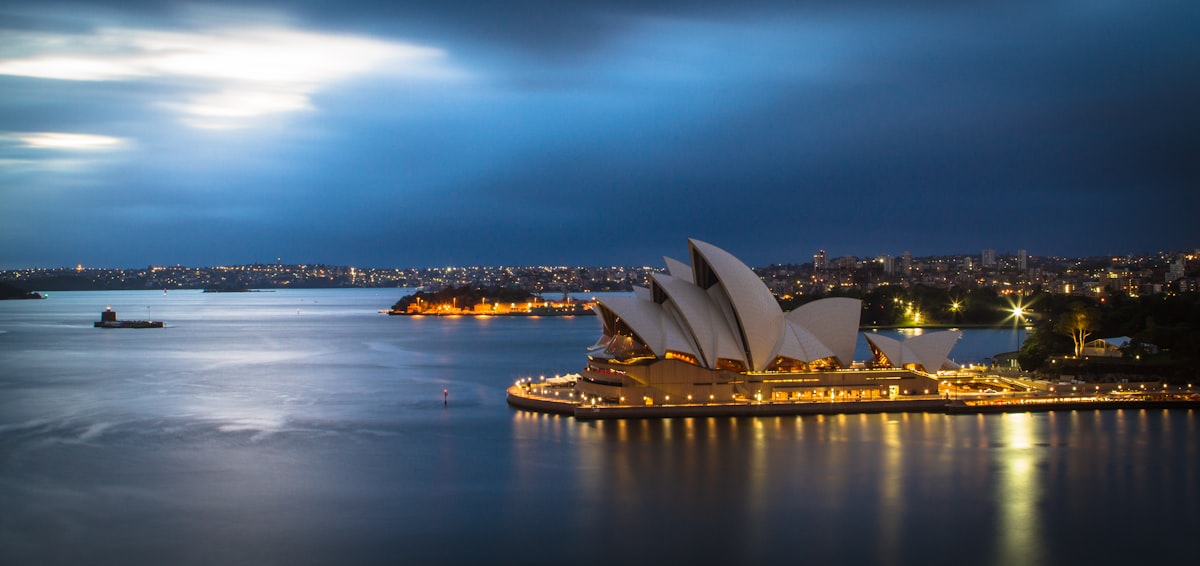
Vancouver, Canada: Where Mountains Meet the Mind
Canada has hosted the IPhO on at least one occasion, and Vancouver, with its extraordinary setting between the Pacific Ocean and the Coast Mountains, is a city that leaves a deep impression on all who visit. The University of British Columbia, perched on a hillside overlooking the sea, is one of Canada's leading research institutions, and when it hosts a physics olympiad, the combination of academic rigour and natural beauty creates an atmosphere that is uniquely inspiring.
For many students, particularly those from Europe and Asia, a trip to Vancouver is their first experience of North America, and the scale of the landscape — the vast forests, the towering mountains, the endless ocean — is a humbling reminder of how much of the world remains to be explored. Physics, after all, is the science of understanding the universe, and there are few better places to contemplate the universe than on the west coast of Canada, where the sheer scale of the natural world makes you feel small in the most invigorating sense.
The Cultural Dimension: What Students Bring Home
It would be a mistake to think of the IPhO as simply a competition. For the students who attend, it is a transformative cultural experience. They spend two weeks living alongside peers from eighty or more countries — young people who think differently, speak differently, eat differently, and approach problems from angles they have never encountered before. The friendships formed during this time often last for decades, and the perspectives gained during conversations in dining halls and on cultural excursions can be as valuable as anything learned in the examination room.
Consider the experience of a British student attending the IPhO in Tokyo. In the examination hall, they are solving the same problems as their Japanese, Chinese, and Korean peers — but the approaches they take, the assumptions they make, and the ways they communicate their reasoning are shaped by their respective educational traditions. During the cultural programme, they visit a Shinto shrine and learn about the Japanese concept of monozukuri — the art of making things with care and dedication — and they begin to understand that physics, like any intellectual pursuit, is not culturally neutral. It is shaped by the society in which it is practiced, and the IPhO is one of the few occasions where these different traditions come into direct contact with one another.
Or imagine a student from Singapore attending the IPhO in Zurich. They walk the same streets as Einstein, visit the same institutions, and perhaps begin to sense the particular quality of Swiss intellectual life — precise, methodical, and deeply committed to the idea that clarity of thought is the highest virtue. They return home with a new perspective on their own education, a deeper appreciation for the global community of physicists, and a network of friends who will go on to do remarkable things in every corner of the world.
The City as Teacher
Every host city teaches its visitors something, whether it intends to or not. Warsaw, where the IPhO began in 1967, taught the early participants about resilience — about how intellectual life can survive even in the most difficult political circumstances. Budapest, Prague, and Bucharest — all early hosts — taught similar lessons about the endurance of the human spirit.
When the IPhO moved to Asia in the 1990s and 2000s, it brought students into contact with educational traditions that prized different qualities — discipline, collective effort, and a deep respect for the accumulated wisdom of the past. Beijing, Seoul, and Bangkok each offered a different perspective on what it means to be a physicist in the 21st century, and the students who attended returned with broader horizons and more nuanced understandings of their own place in the world.
More recently, the IPhO has expanded into new regions — the Middle East, with Iran hosting in Isfahan in 2024 and Tehran in 2025, and Latin America, Africa, and Southeast Asia increasingly entering the conversation. Each new host city adds another chapter to the story of the IPhO, and each one reminds the physics community that excellence is not confined to any single part of the world.
The Next Chapter: Tehran 2025 and Beyond
The 55th International Physics Olympiad will take place in Tehran, Iran in July 2025. Iran has a distinguished tradition in mathematics and physics, and the city of Tehran — a metropolis of nearly nine million people, nestled against the Alborz Mountains — will offer the visiting students a cultural experience unlike any other. The architecture of Iran, with its intricate geometric patterns and its deep engagement with light and symmetry, is itself a form of physics made visible, and the students who attend will have much to learn both inside and outside the examination hall.
What will the students take away from Tehran? Perhaps a deeper appreciation for the universality of physics — the fact that the laws of nature are the same in every culture and every language. Perhaps a new set of friendships with young people whose lives are very different from their own. Perhaps, most importantly, a sense that the pursuit of knowledge is a fundamentally human endeavour, one that transcends borders, politics, and history, and that unites us all in a common project of understanding the world we share.
A Journey Without End
The story of the IPhO is, in many ways, the story of a journey without end. Each year, a new city opens its doors. Each year, a new group of students arrives, full of anticipation and anxiety, ready to test themselves against the best in the world. And each year, the city leaves its mark on them — in the food they eat, the streets they walk, the people they meet, and the problems they solve. The medals may be packed away in drawers, the certificates may be filed in folders, but the experience of spending two weeks in a foreign city, surrounded by people who share your passion for physics, is something that never fades.
For those who have participated, the IPhO becomes a part of their identity — a shared reference point that connects them to thousands of others around the world. When two physicists meet for the first time and discover that they both attended the IPhO — perhaps in different years, perhaps in different cities — there is an immediate sense of recognition, of shared experience, of belonging to a community that transcends national boundaries. The cities that have hosted the IPhO become, in a sense, the共同 capitals of this invisible nation — a nation of the mind, united not by geography or politics, but by a common love of understanding.
The next city is waiting. The next journey is about to begin. And somewhere, right now, a student is picking up a past paper, opening a textbook, or walking into a laboratory for the first time — taking the first step on a journey that could carry them, one day, to a city they have never visited, to meet peers they have never imagined, and to discover, in the company of the world's best young physicists, just how far their own mind can reach.